AT PEACE: Alvar Sakari on Designing for What a Space Actually Is

There is a discipline in architecture that is often invoked but rarely sustained: the decision to stop adding and begin removing. Ludwig Mies van der Rohe described it as almost nothing. Dieter Rams framed it as as little design as possible. Both point to the same premise — that reduction is not absence, but precision. What remains must be enough.

Alvar Sakari works from that position. Trained in Copenhagen and now based in Helsinki, his practice is defined less by addition than by subtraction — of material, of ornament, of unnecessary resolution. Returning to Finland, he brought with him a sensibility that sits slightly outside the prevailing pace of the local context.

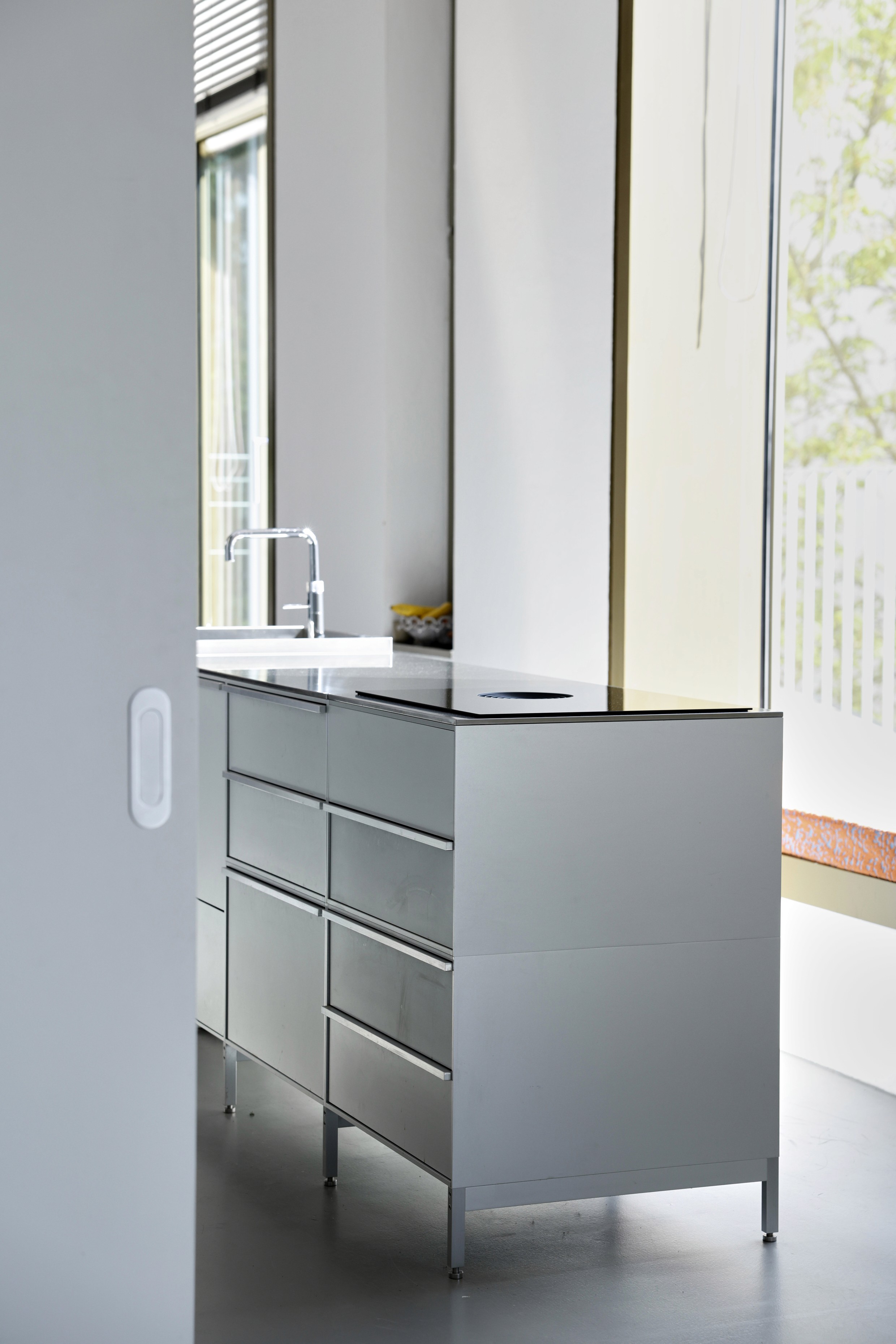
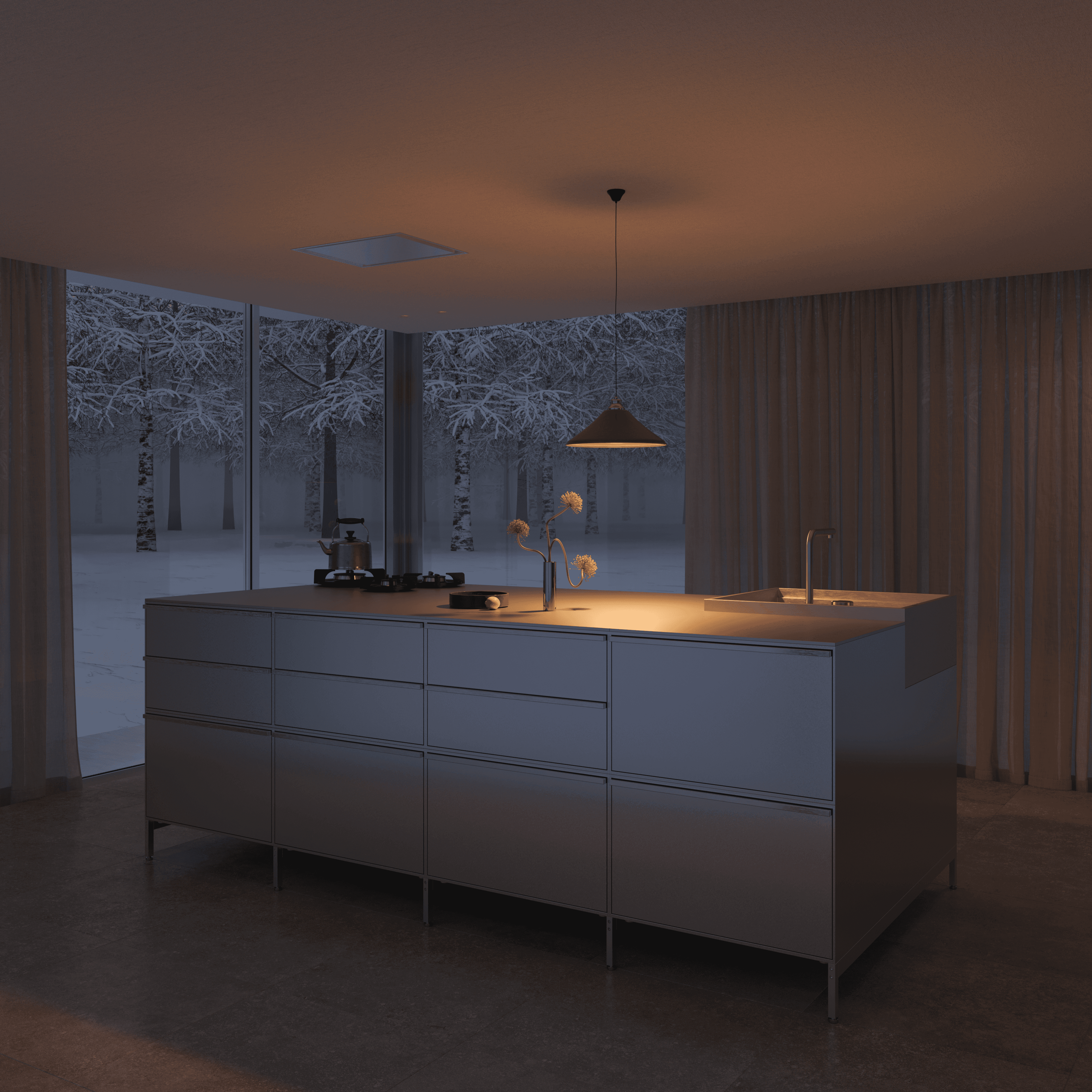
His collaboration, AT Peace with TERMINO emerged from a personal project: a steel pavilion conceptualized in 2018. Visualized by Lukasz Staniewski, Alvar built out the space in which the TERMINO kitchen does not appear as an object, but as a continuation of the same logic — modular, industrial, and materially consistent with the architecture itself.

Alma Leandra spoke to him about restraint, designing for a culture that values individuality yet reproduces sameness, and about the challenge of making something genuinely good from as little as possible.

What prompted your decision to return to Finland and establish your own studio?

Copenhagen felt like the right place to study, but returning home was important, to reconnect, and to understand the market I actually wanted to work in. The timing wasn't ideal, the industry there moves slowly. But starting my own studio had always been the goal, and doing it from home felt more grounded than trying to do it abroad.

Does designing in your home country give you more creative autonomy?

What I notice is that Finnish interest in German and Danish design is genuinely growing — but it arrives two to four years late. The appetite is there, it just lags. I'm not sure Finnish audiences are ready for a brutalist sensibility yet. They respect steel and industrial language, but there's a difference between respect and readiness. Committing to that aesthetic in your own home requires a confidence that is still developing there. Many want to be international, and are drawn to what's coming out of Berlin — but translating that into actual purchasing decisions is a different thing entirely. That gap is where I want to push my work.

Would you say there's a lack of individualism in Finland?

Most want to feel different, but then end up doing the same thing without realising it. It used to be a very particular sameness — clean, simple, deliberately understated. Now there's a collective push toward something grittier and more expressive. Which would be interesting, except it's already a few years old everywhere else. Everything arrives late, so by the time something feels like a statement here, it has already moved on somewhere else.

Does this push you in your design process to also go more against that? How does it affect your work, living in such a culture? 

I just do what I personally find interesting — and I think more people are genuinely curious about design now, partly because we're at an age where we're starting to make real decisions about our own homes.

That said, I still feel like most people gravitate toward the same familiar names, the big Scandinavian brands, the ones that feel safe and accessible. Which they are. But that accessibility comes from scale and mass production is what makes them affordable. Most end up with the same bedsheets, the same lights, the same vases, and somehow still feel like they have a personal point of view on design. It's a bit like fashion in that way, the desire to feel individual expressed through the exact same things everyone else is buying.

TERMINO is something different. It reads like a company that is genuinely trying to do something outside that logic. Which I respect. It's a niche proposition. 

Your work emphasizes material and ornamental reduction, what draws you to this restraint, and how do you decide what is essential in the space?

Ornamentation doesn't have to mean decoration in the traditional sense. It can be as quiet as a specific screw or the foot of a module. My instinct is always to remove what isn't necessary. You could call it minimalism, though ornamentation itself is such a broad concept that the label almost doesn't matter.

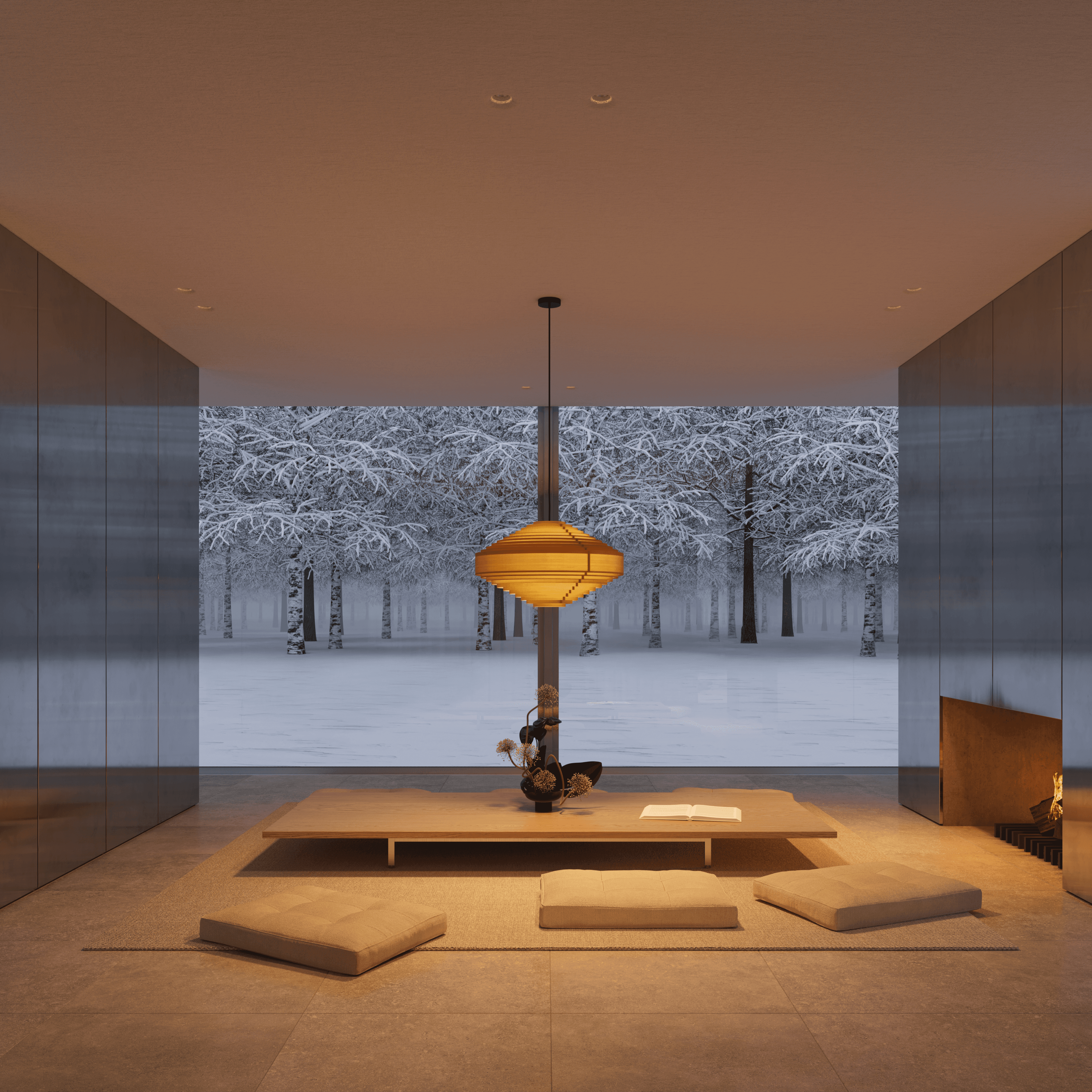
What interests me is the challenge of designing something for exactly what it is. When you strip away unnecessary detail, you stop masking the space and start revealing it. Light becomes a material, an ornament. A limited palette of materials creates a kind of calm — fewer competing textures means less visual noise, and the space can finally speak for itself.

I think a lot of projects that are considered successful are really just heavily decorated. Fill a room with designer pieces and people will call it beautiful, but they're responding to the objects, not the space. The room itself might be quite ordinary. The same logic applies to furniture. A chair can be lifted entirely by a fabric you happen to like, and suddenly the chair feels considered when really it's just the textile doing the work.

It's deeply subjective, which makes it hard to argue. But my position is fairly simple: if you can make something genuinely good using as little as possible, then you've actually made something. You see it, you understand it, you don't have to be told what it is. And I think that understanding comes down to assembly — how the parts come together, and whether each one earns its place.

You often describe that a feeling leads a project. Can you elaborate on how this intuition guided you through the TERMINO collaboration?

When I connect with a brief, the project becomes a feeling. My process is guided by a sense of what the project should be. 

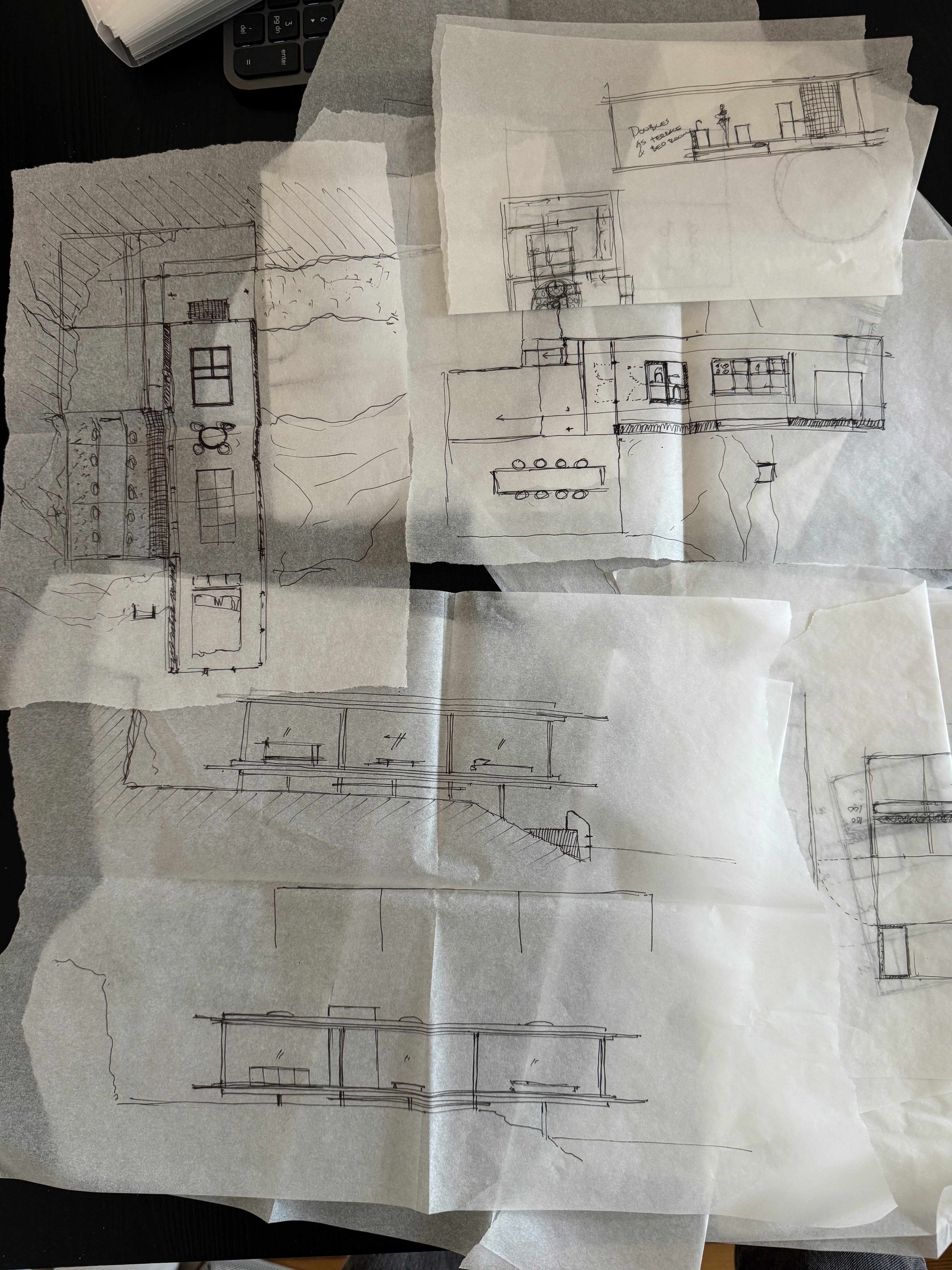
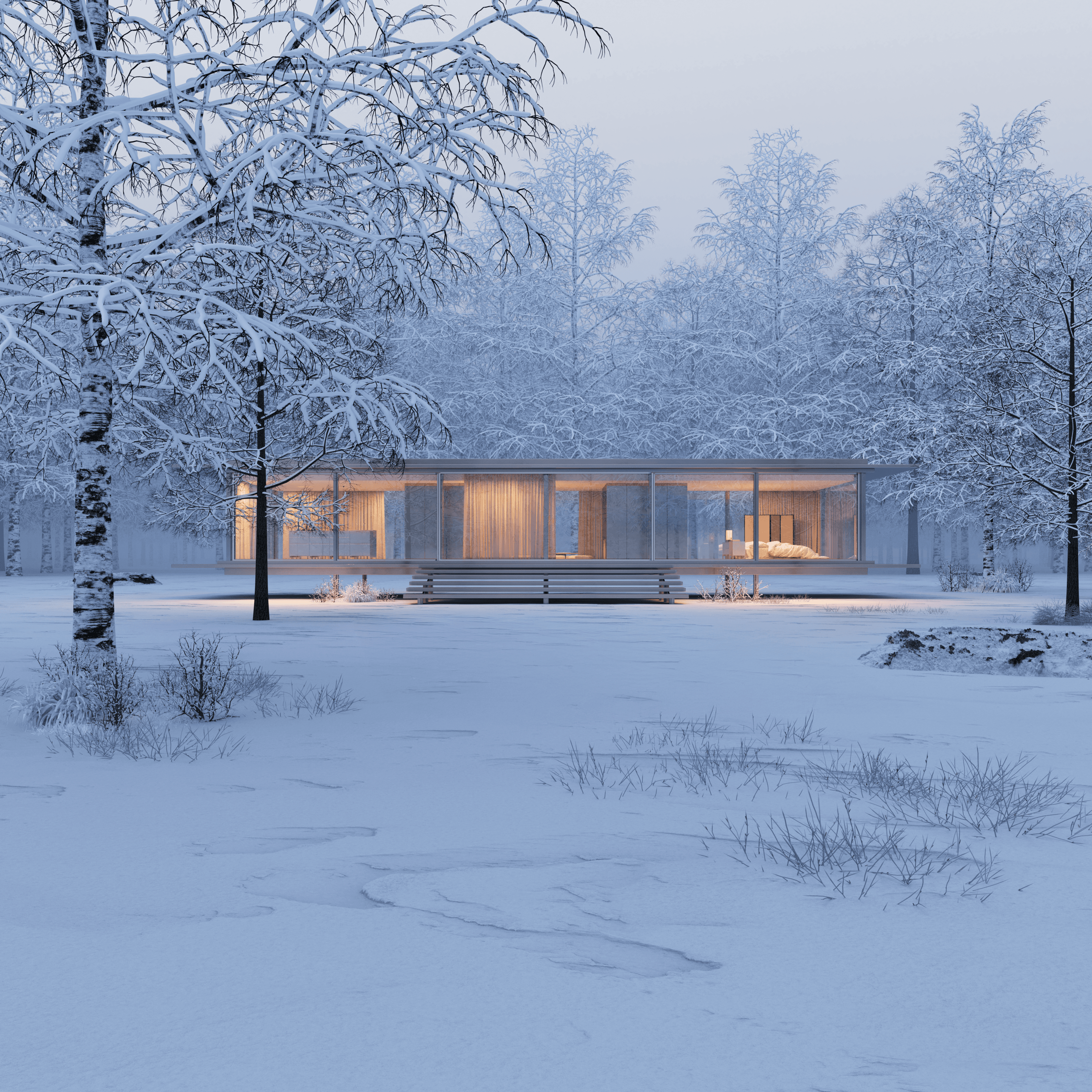
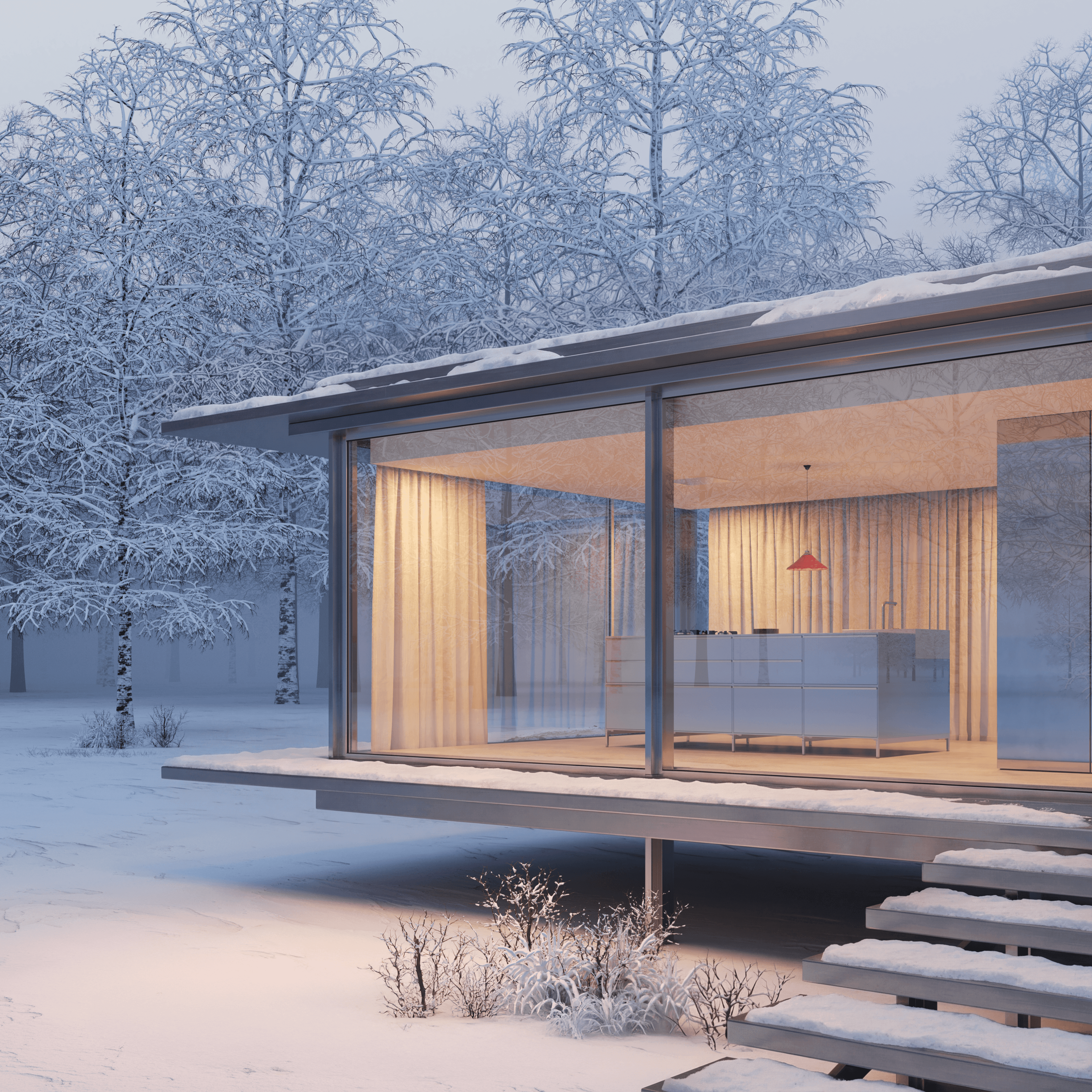
With TERMINO it started from the pavilion concept, which was all steel. That already carries something precise and material. But working through it I realised it felt too cold, too enclosed — so the space grew, and I divided it into three zones: kitchen, living room, bedroom. From there the decisions followed instinctively. The exterior walls I had planned began to feel wrong. A glass box felt more honest — a 360-degree relationship with the surrounding landscape, nature becoming part of the interior.

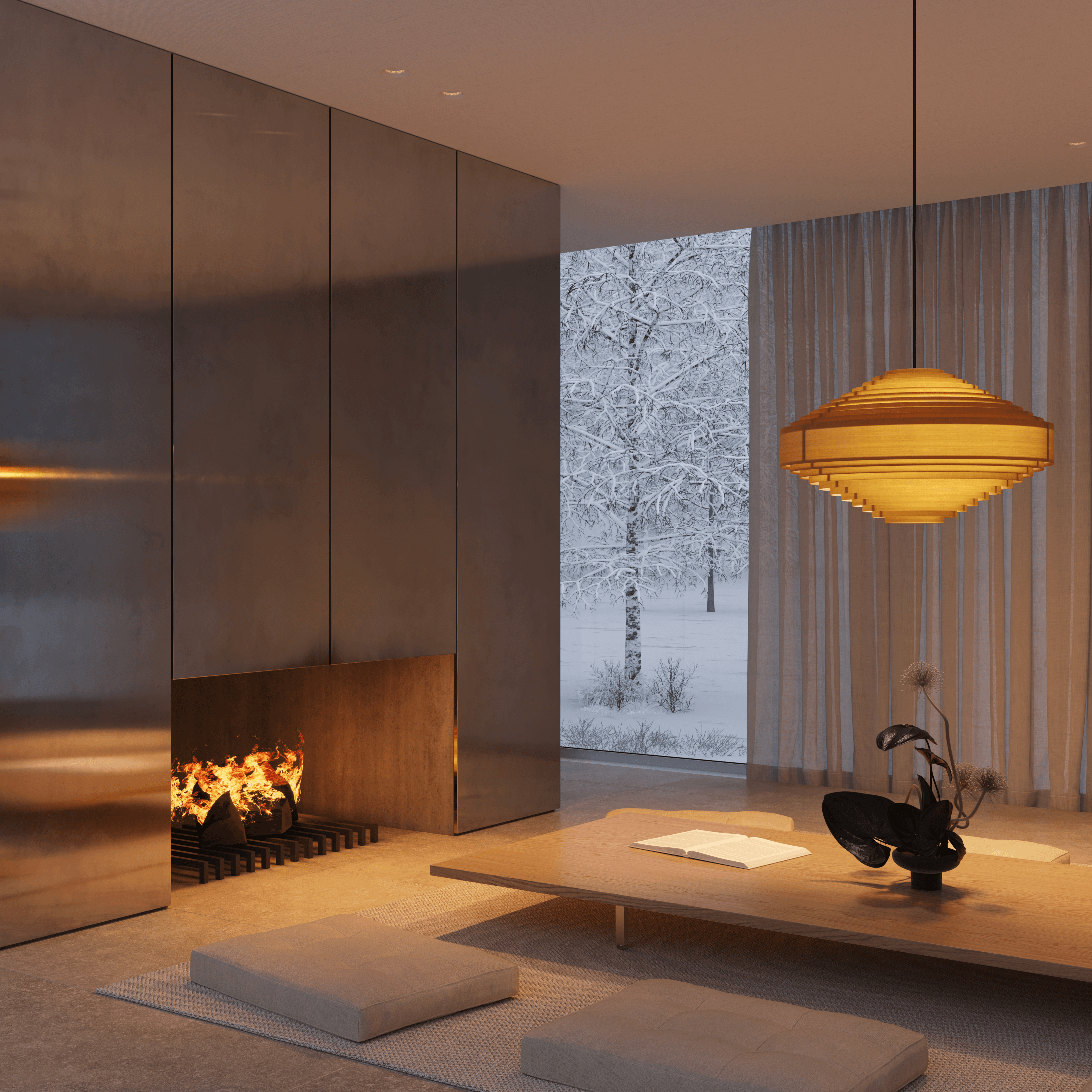
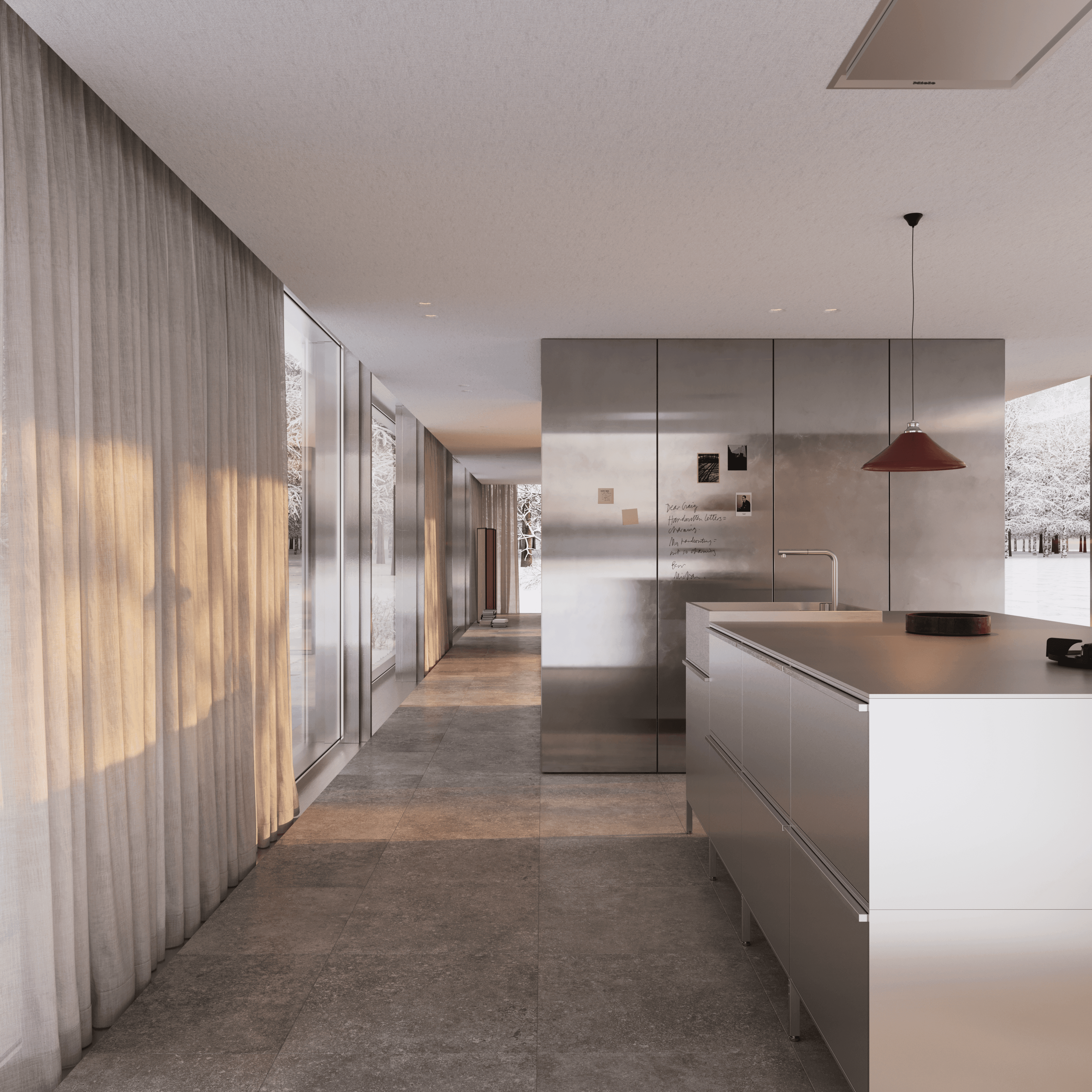
From there it became a conversation between materials and sensation. The acoustic ceiling came from thinking about morning — wanting that first experience of the day to be soft and unhurried. The stone floor was the counterweight to all that steel and glass — not warm in temperature, but connected to something organic. Forest. Earth. Heated underfoot, it becomes something you want to move through barefoot.

I don't have a linear method. I make a decision, something feels wrong, I change it, part of it feels right and I keep that. The project moves forward that way — always led by whether something feels resolved or not.

Iteration is central to your process. How do you know when a design has reached clarity and coherence?

ALVAR: Sometimes, I have to just decide that, okay, now it's now it's ready. Especially if were pushing deadlines. 

The process involves a lot of iterations. I might take one brief, one feeling, and produce ten completely different versions from it — quite radical variations, all working from the same starting point. The final result is usually somewhere in the combination of those. A detail from one version, a solution from another, and then it gradually becomes one thing. You just spend a lot of hours with it. Sometimes I step away for a day deliberately, create some distance, and then come back and find the project again.

With the TERMINO collaboration — the pavilion I mentioned was actually a personal project from 2018, nothing to do with TERMINO at the time. It was just a steel box I had been trying to make liveable. Lucas was the one who visualised it, he made all the renderings. So what you see in the TERMINO collaboration is essentially the final version of that pavilion design — though it looks almost nothing like where it started. The pavilion was just the concept, the idea of a steel building. That was the starting point.

This project emphasizes modularity, and especially like you were already mentioning spatial fluidity. How did the terminal kitchen shape your choices for designing the space? 

A lot of it comes down to the exterior — the building stands on steel stilts, which immediately references the TERMINO modules. The sleekness, the materiality, the logic of assembly. The modules are quite easy to read — you understand how they go together, they're industrial without being complicated. I wanted the building to have that same quality. Stilts, base, pillars, roof. A very simple structure. Nothing hidden, nothing decorative. The same steel, the same minimal language, nothing added that doesn't need to be there. Which is, again, just how I think about design.

TERMINOs design philosophy overlaps quite a lot with yours. 

Yes. I was personally interested in Termino's modular systems before this project, so that just felt like a good match. The modularity shaped this project's framework nicely. Are there other forms or materials you have been wanting to explore?

Collaborations. I am also interested in mixing materials, ceramics with textiles, wire, or stone.

How do you imagine your work evolving?

I hope I never stop experimenting. The moment we believe we have the answer is the moment we begin to stagnate. I hope the world remains kind enough to allow me to pursue this, and that I can continue to follow my intuition, regardless of circumstance.

How would you describe your own work?

A balance between control and surrender. A mix of processes and reflections.

What is currently haunting and driving your practice?

Intuition is the driving force. I am fascinated by theoretical frameworks in design. My "Creature" series, for example, is based on Carl Jung's archetypes. What I find most beautiful is that people always recognise something familiar in these hybrid beings — everyone projects something of their own.

How do you balance privacy without really utilizing walls in the classical sense?

The space is designed for two people — private, but with enough room for guests.

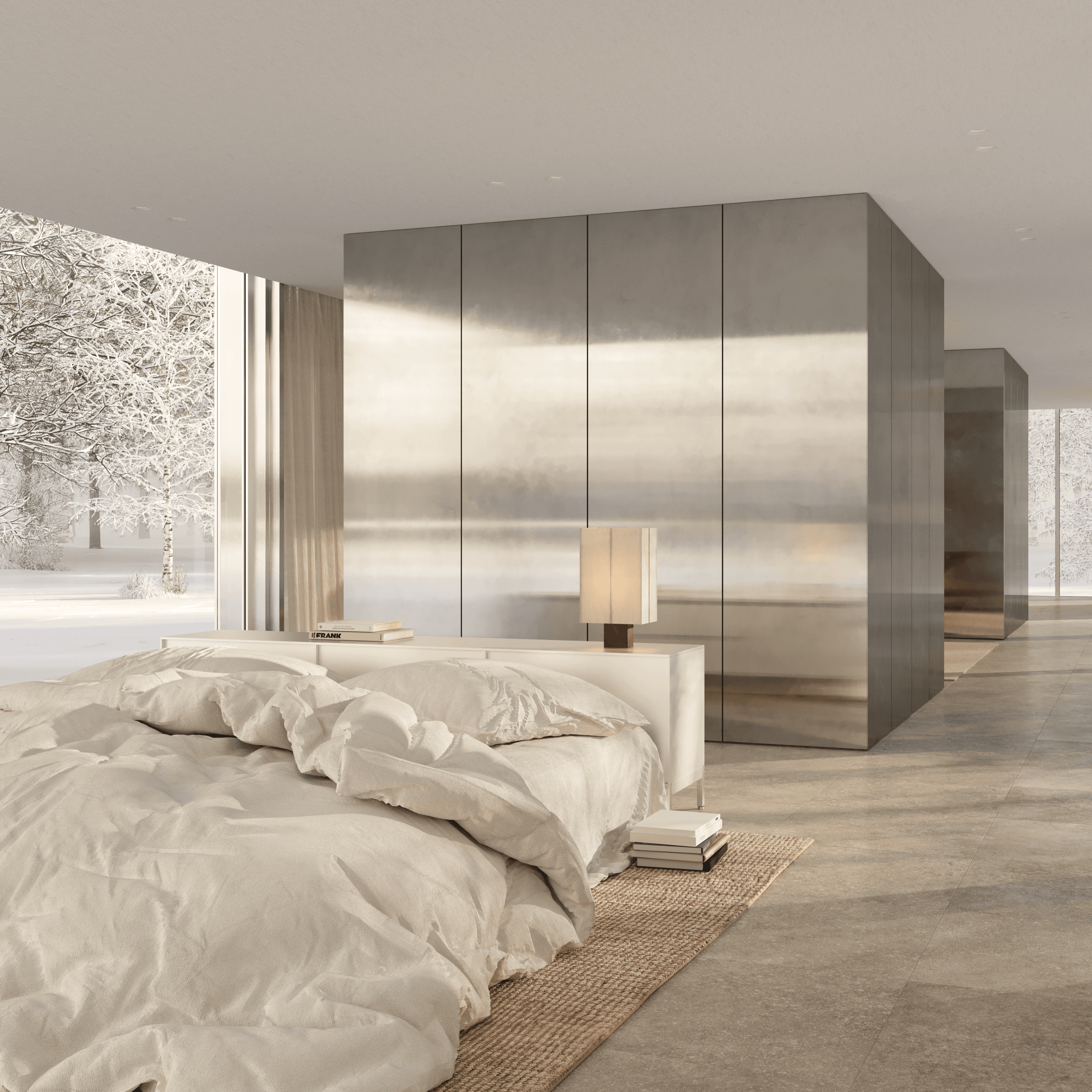
What makes it work spatially are the two cores. It acts as a dividing wall without closing the space off completely. You move freely around it, but the rooms are genuinely separated — you can't see from the bedroom into the kitchen, which in a space this size is not something you take for granted. It's open but not entirely open. Semi-open, maybe. If you want to close the bedroom off completely, sliding doors integrated into the core would do it.

The core also carries most of the functional load — toilet between the bedroom and living room, fridge, kitchen cabinets, wardrobe. When you come in via the central staircase the wardrobe is immediately to the left, built into the core wall. No separate furniture, no cabinets standing out from the wall. Everything contained, everything serving the structure.

The fireplace was a deliberate choice over the more obvious solutions — layering in textures, adding small lights, decorating toward warmth. Instead, one real fire. A natural element that does the same work more honestly.
CREDITS

Editor

Alma Leandra

Visualized by

Lukasz Staniewski

There is a discipline in architecture that is often invoked but rarely sustained: the decision to stop adding and begin removing. Ludwig Mies van der Rohe described it as almost nothing. Dieter Rams framed it as as little design as possible. Both point to the same premise — that reduction is not absence, but precision. What remains must be enough.

Alvar Sakari works from that position. Trained in Copenhagen and now based in Helsinki, his practice is defined less by addition than by subtraction — of material, of ornament, of unnecessary resolution. Returning to Finland, he brought with him a sensibility that sits slightly outside the prevailing pace of the local context.

His collaboration, AT Peace with TERMINO emerged from a personal project: a steel pavilion conceptualized in 2018. Visualized by Lukasz Staniewski, Alvar built out the space in which the TERMINO kitchen does not appear as an object, but as a continuation of the same logic — modular, industrial, and materially consistent with the architecture itself.

Alma Leandra spoke to him about restraint, designing for a culture that values individuality yet reproduces sameness, and about the challenge of making something genuinely good from as little as possible.

What prompted your decision to return to Finland and establish your own studio?

Copenhagen felt like the right place to study, but returning home was important, to reconnect, and to understand the market I actually wanted to work in. The timing wasn't ideal, the industry there moves slowly. But starting my own studio had always been the goal, and doing it from home felt more grounded than trying to do it abroad.

Does designing in your home country give you more creative autonomy?

What I notice is that Finnish interest in German and Danish design is genuinely growing — but it arrives two to four years late. The appetite is there, it just lags. I'm not sure Finnish audiences are ready for a brutalist sensibility yet. They respect steel and industrial language, but there's a difference between respect and readiness. Committing to that aesthetic in your own home requires a confidence that is still developing there. Many want to be international, and are drawn to what's coming out of Berlin — but translating that into actual purchasing decisions is a different thing entirely. That gap is where I want to push my work.

Would you say there's a lack of individualism in Finland?

Most want to feel different, but then end up doing the same thing without realising it. It used to be a very particular sameness — clean, simple, deliberately understated. Now there's a collective push toward something grittier and more expressive. Which would be interesting, except it's already a few years old everywhere else. Everything arrives late, so by the time something feels like a statement here, it has already moved on somewhere else.

Does this push you in your design process to also go more against that? How does it affect your work, living in such a culture? 

I just do what I personally find interesting — and I think more people are genuinely curious about design now, partly because we're at an age where we're starting to make real decisions about our own homes.

That said, I still feel like most people gravitate toward the same familiar names, the big Scandinavian brands, the ones that feel safe and accessible. Which they are. But that accessibility comes from scale and mass production is what makes them affordable. Most end up with the same bedsheets, the same lights, the same vases, and somehow still feel like they have a personal point of view on design. It's a bit like fashion in that way, the desire to feel individual expressed through the exact same things everyone else is buying.

TERMINO is something different. It reads like a company that is genuinely trying to do something outside that logic. Which I respect. It's a niche proposition. 

Your work emphasizes material and ornamental reduction, what draws you to this restraint, and how do you decide what is essential in the space?

Ornamentation doesn't have to mean decoration in the traditional sense. It can be as quiet as a specific screw or the foot of a module. My instinct is always to remove what isn't necessary. You could call it minimalism, though ornamentation itself is such a broad concept that the label almost doesn't matter.

What interests me is the challenge of designing something for exactly what it is. When you strip away unnecessary detail, you stop masking the space and start revealing it. Light becomes a material, an ornament. A limited palette of materials creates a kind of calm — fewer competing textures means less visual noise, and the space can finally speak for itself.

I think a lot of projects that are considered successful are really just heavily decorated. Fill a room with designer pieces and people will call it beautiful, but they're responding to the objects, not the space. The room itself might be quite ordinary. The same logic applies to furniture. A chair can be lifted entirely by a fabric you happen to like, and suddenly the chair feels considered when really it's just the textile doing the work.

It's deeply subjective, which makes it hard to argue. But my position is fairly simple: if you can make something genuinely good using as little as possible, then you've actually made something. You see it, you understand it, you don't have to be told what it is. And I think that understanding comes down to assembly — how the parts come together, and whether each one earns its place.

You often describe that a feeling leads a project. Can you elaborate on how this intuition guided you through the TERMINO collaboration?

When I connect with a brief, the project becomes a feeling. My process is guided by a sense of what the project should be. 

With TERMINO it started from the pavilion concept, which was all steel. That already carries something precise and material. But working through it I realised it felt too cold, too enclosed — so the space grew, and I divided it into three zones: kitchen, living room, bedroom. From there the decisions followed instinctively. The exterior walls I had planned began to feel wrong. A glass box felt more honest — a 360-degree relationship with the surrounding landscape, nature becoming part of the interior.

From there it became a conversation between materials and sensation. The acoustic ceiling came from thinking about morning — wanting that first experience of the day to be soft and unhurried. The stone floor was the counterweight to all that steel and glass — not warm in temperature, but connected to something organic. Forest. Earth. Heated underfoot, it becomes something you want to move through barefoot.

I don't have a linear method. I make a decision, something feels wrong, I change it, part of it feels right and I keep that. The project moves forward that way — always led by whether something feels resolved or not.

Iteration is central to your process. How do you know when a design has reached clarity and coherence?

ALVAR: Sometimes, I have to just decide that, okay, now it's now it's ready. Especially if were pushing deadlines. 

The process involves a lot of iterations. I might take one brief, one feeling, and produce ten completely different versions from it — quite radical variations, all working from the same starting point. The final result is usually somewhere in the combination of those. A detail from one version, a solution from another, and then it gradually becomes one thing. You just spend a lot of hours with it. Sometimes I step away for a day deliberately, create some distance, and then come back and find the project again.

With the TERMINO collaboration — the pavilion I mentioned was actually a personal project from 2018, nothing to do with TERMINO at the time. It was just a steel box I had been trying to make liveable. Lucas was the one who visualised it, he made all the renderings. So what you see in the TERMINO collaboration is essentially the final version of that pavilion design — though it looks almost nothing like where it started. The pavilion was just the concept, the idea of a steel building. That was the starting point.

This project emphasizes modularity, and especially like you were already mentioning spatial fluidity. How did the terminal kitchen shape your choices for designing the space? 

A lot of it comes down to the exterior — the building stands on steel stilts, which immediately references the TERMINO modules. The sleekness, the materiality, the logic of assembly. The modules are quite easy to read — you understand how they go together, they're industrial without being complicated. I wanted the building to have that same quality. Stilts, base, pillars, roof. A very simple structure. Nothing hidden, nothing decorative. The same steel, the same minimal language, nothing added that doesn't need to be there. Which is, again, just how I think about design.

TERMINOs design philosophy overlaps quite a lot with yours. 

Yes. I was personally interested in Termino's modular systems before this project, so that just felt like a good match. The modularity shaped this project's framework nicely. Are there other forms or materials you have been wanting to explore?

Collaborations. I am also interested in mixing materials, ceramics with textiles, wire, or stone.

How do you imagine your work evolving?

I hope I never stop experimenting. The moment we believe we have the answer is the moment we begin to stagnate. I hope the world remains kind enough to allow me to pursue this, and that I can continue to follow my intuition, regardless of circumstance.

How would you describe your own work?

A balance between control and surrender. A mix of processes and reflections.

What is currently haunting and driving your practice?

Intuition is the driving force. I am fascinated by theoretical frameworks in design. My "Creature" series, for example, is based on Carl Jung's archetypes. What I find most beautiful is that people always recognise something familiar in these hybrid beings — everyone projects something of their own.

How do you balance privacy without really utilizing walls in the classical sense?

The space is designed for two people — private, but with enough room for guests.

What makes it work spatially are the two cores. It acts as a dividing wall without closing the space off completely. You move freely around it, but the rooms are genuinely separated — you can't see from the bedroom into the kitchen, which in a space this size is not something you take for granted. It's open but not entirely open. Semi-open, maybe. If you want to close the bedroom off completely, sliding doors integrated into the core would do it.

The core also carries most of the functional load — toilet between the bedroom and living room, fridge, kitchen cabinets, wardrobe. When you come in via the central staircase the wardrobe is immediately to the left, built into the core wall. No separate furniture, no cabinets standing out from the wall. Everything contained, everything serving the structure.

The fireplace was a deliberate choice over the more obvious solutions — layering in textures, adding small lights, decorating toward warmth. Instead, one real fire. A natural element that does the same work more honestly.
CREDITS

Editor

Alma Leandra

Visualized by

Lukasz Staniewski

There is a discipline in architecture that is often invoked but rarely sustained: the decision to stop adding and begin removing. Ludwig Mies van der Rohe described it as almost nothing. Dieter Rams framed it as as little design as possible. Both point to the same premise — that reduction is not absence, but precision. What remains must be enough.

Alvar Sakari works from that position. Trained in Copenhagen and now based in Helsinki, his practice is defined less by addition than by subtraction — of material, of ornament, of unnecessary resolution. Returning to Finland, he brought with him a sensibility that sits slightly outside the prevailing pace of the local context.

His collaboration, AT Peace with TERMINO emerged from a personal project: a steel pavilion conceptualized in 2018. Visualized by Lukasz Staniewski, Alvar built out the space in which the TERMINO kitchen does not appear as an object, but as a continuation of the same logic — modular, industrial, and materially consistent with the architecture itself.

Alma Leandra spoke to him about restraint, designing for a culture that values individuality yet reproduces sameness, and about the challenge of making something genuinely good from as little as possible.

What prompted your decision to return to Finland and establish your own studio?

Copenhagen felt like the right place to study, but returning home was important, to reconnect, and to understand the market I actually wanted to work in. The timing wasn't ideal, the industry there moves slowly. But starting my own studio had always been the goal, and doing it from home felt more grounded than trying to do it abroad.

Does designing in your home country give you more creative autonomy?

What I notice is that Finnish interest in German and Danish design is genuinely growing — but it arrives two to four years late. The appetite is there, it just lags. I'm not sure Finnish audiences are ready for a brutalist sensibility yet. They respect steel and industrial language, but there's a difference between respect and readiness. Committing to that aesthetic in your own home requires a confidence that is still developing there. Many want to be international, and are drawn to what's coming out of Berlin — but translating that into actual purchasing decisions is a different thing entirely. That gap is where I want to push my work.

Would you say there's a lack of individualism in Finland?

Most want to feel different, but then end up doing the same thing without realising it. It used to be a very particular sameness — clean, simple, deliberately understated. Now there's a collective push toward something grittier and more expressive. Which would be interesting, except it's already a few years old everywhere else. Everything arrives late, so by the time something feels like a statement here, it has already moved on somewhere else.

Does this push you in your design process to also go more against that? How does it affect your work, living in such a culture? 

I just do what I personally find interesting — and I think more people are genuinely curious about design now, partly because we're at an age where we're starting to make real decisions about our own homes.

That said, I still feel like most people gravitate toward the same familiar names, the big Scandinavian brands, the ones that feel safe and accessible. Which they are. But that accessibility comes from scale and mass production is what makes them affordable. Most end up with the same bedsheets, the same lights, the same vases, and somehow still feel like they have a personal point of view on design. It's a bit like fashion in that way, the desire to feel individual expressed through the exact same things everyone else is buying.

TERMINO is something different. It reads like a company that is genuinely trying to do something outside that logic. Which I respect. It's a niche proposition. 

Your work emphasizes material and ornamental reduction, what draws you to this restraint, and how do you decide what is essential in the space?

Ornamentation doesn't have to mean decoration in the traditional sense. It can be as quiet as a specific screw or the foot of a module. My instinct is always to remove what isn't necessary. You could call it minimalism, though ornamentation itself is such a broad concept that the label almost doesn't matter.

What interests me is the challenge of designing something for exactly what it is. When you strip away unnecessary detail, you stop masking the space and start revealing it. Light becomes a material, an ornament. A limited palette of materials creates a kind of calm — fewer competing textures means less visual noise, and the space can finally speak for itself.

I think a lot of projects that are considered successful are really just heavily decorated. Fill a room with designer pieces and people will call it beautiful, but they're responding to the objects, not the space. The room itself might be quite ordinary. The same logic applies to furniture. A chair can be lifted entirely by a fabric you happen to like, and suddenly the chair feels considered when really it's just the textile doing the work.

It's deeply subjective, which makes it hard to argue. But my position is fairly simple: if you can make something genuinely good using as little as possible, then you've actually made something. You see it, you understand it, you don't have to be told what it is. And I think that understanding comes down to assembly — how the parts come together, and whether each one earns its place.

You often describe that a feeling leads a project. Can you elaborate on how this intuition guided you through the TERMINO collaboration?

When I connect with a brief, the project becomes a feeling. My process is guided by a sense of what the project should be. 

With TERMINO it started from the pavilion concept, which was all steel. That already carries something precise and material. But working through it I realised it felt too cold, too enclosed — so the space grew, and I divided it into three zones: kitchen, living room, bedroom. From there the decisions followed instinctively. The exterior walls I had planned began to feel wrong. A glass box felt more honest — a 360-degree relationship with the surrounding landscape, nature becoming part of the interior.

From there it became a conversation between materials and sensation. The acoustic ceiling came from thinking about morning — wanting that first experience of the day to be soft and unhurried. The stone floor was the counterweight to all that steel and glass — not warm in temperature, but connected to something organic. Forest. Earth. Heated underfoot, it becomes something you want to move through barefoot.

I don't have a linear method. I make a decision, something feels wrong, I change it, part of it feels right and I keep that. The project moves forward that way — always led by whether something feels resolved or not.

Iteration is central to your process. How do you know when a design has reached clarity and coherence?

ALVAR: Sometimes, I have to just decide that, okay, now it's now it's ready. Especially if were pushing deadlines. 

The process involves a lot of iterations. I might take one brief, one feeling, and produce ten completely different versions from it — quite radical variations, all working from the same starting point. The final result is usually somewhere in the combination of those. A detail from one version, a solution from another, and then it gradually becomes one thing. You just spend a lot of hours with it. Sometimes I step away for a day deliberately, create some distance, and then come back and find the project again.

With the TERMINO collaboration — the pavilion I mentioned was actually a personal project from 2018, nothing to do with TERMINO at the time. It was just a steel box I had been trying to make liveable. Lucas was the one who visualised it, he made all the renderings. So what you see in the TERMINO collaboration is essentially the final version of that pavilion design — though it looks almost nothing like where it started. The pavilion was just the concept, the idea of a steel building. That was the starting point.

This project emphasizes modularity, and especially like you were already mentioning spatial fluidity. How did the terminal kitchen shape your choices for designing the space? 

A lot of it comes down to the exterior — the building stands on steel stilts, which immediately references the TERMINO modules. The sleekness, the materiality, the logic of assembly. The modules are quite easy to read — you understand how they go together, they're industrial without being complicated. I wanted the building to have that same quality. Stilts, base, pillars, roof. A very simple structure. Nothing hidden, nothing decorative. The same steel, the same minimal language, nothing added that doesn't need to be there. Which is, again, just how I think about design.

TERMINOs design philosophy overlaps quite a lot with yours. 

Yes. I was personally interested in Termino's modular systems before this project, so that just felt like a good match. The modularity shaped this project's framework nicely. Are there other forms or materials you have been wanting to explore?

Collaborations. I am also interested in mixing materials, ceramics with textiles, wire, or stone.

How do you imagine your work evolving?

I hope I never stop experimenting. The moment we believe we have the answer is the moment we begin to stagnate. I hope the world remains kind enough to allow me to pursue this, and that I can continue to follow my intuition, regardless of circumstance.

How would you describe your own work?

A balance between control and surrender. A mix of processes and reflections.

What is currently haunting and driving your practice?

Intuition is the driving force. I am fascinated by theoretical frameworks in design. My "Creature" series, for example, is based on Carl Jung's archetypes. What I find most beautiful is that people always recognise something familiar in these hybrid beings — everyone projects something of their own.

How do you balance privacy without really utilizing walls in the classical sense?

The space is designed for two people — private, but with enough room for guests.

What makes it work spatially are the two cores. It acts as a dividing wall without closing the space off completely. You move freely around it, but the rooms are genuinely separated — you can't see from the bedroom into the kitchen, which in a space this size is not something you take for granted. It's open but not entirely open. Semi-open, maybe. If you want to close the bedroom off completely, sliding doors integrated into the core would do it.

The core also carries most of the functional load — toilet between the bedroom and living room, fridge, kitchen cabinets, wardrobe. When you come in via the central staircase the wardrobe is immediately to the left, built into the core wall. No separate furniture, no cabinets standing out from the wall. Everything contained, everything serving the structure.

The fireplace was a deliberate choice over the more obvious solutions — layering in textures, adding small lights, decorating toward warmth. Instead, one real fire. A natural element that does the same work more honestly.
CREDITS

Editor

Alma Leandra

Visualized by

Lukasz Staniewski