Prism: A Desert Modern Atrium
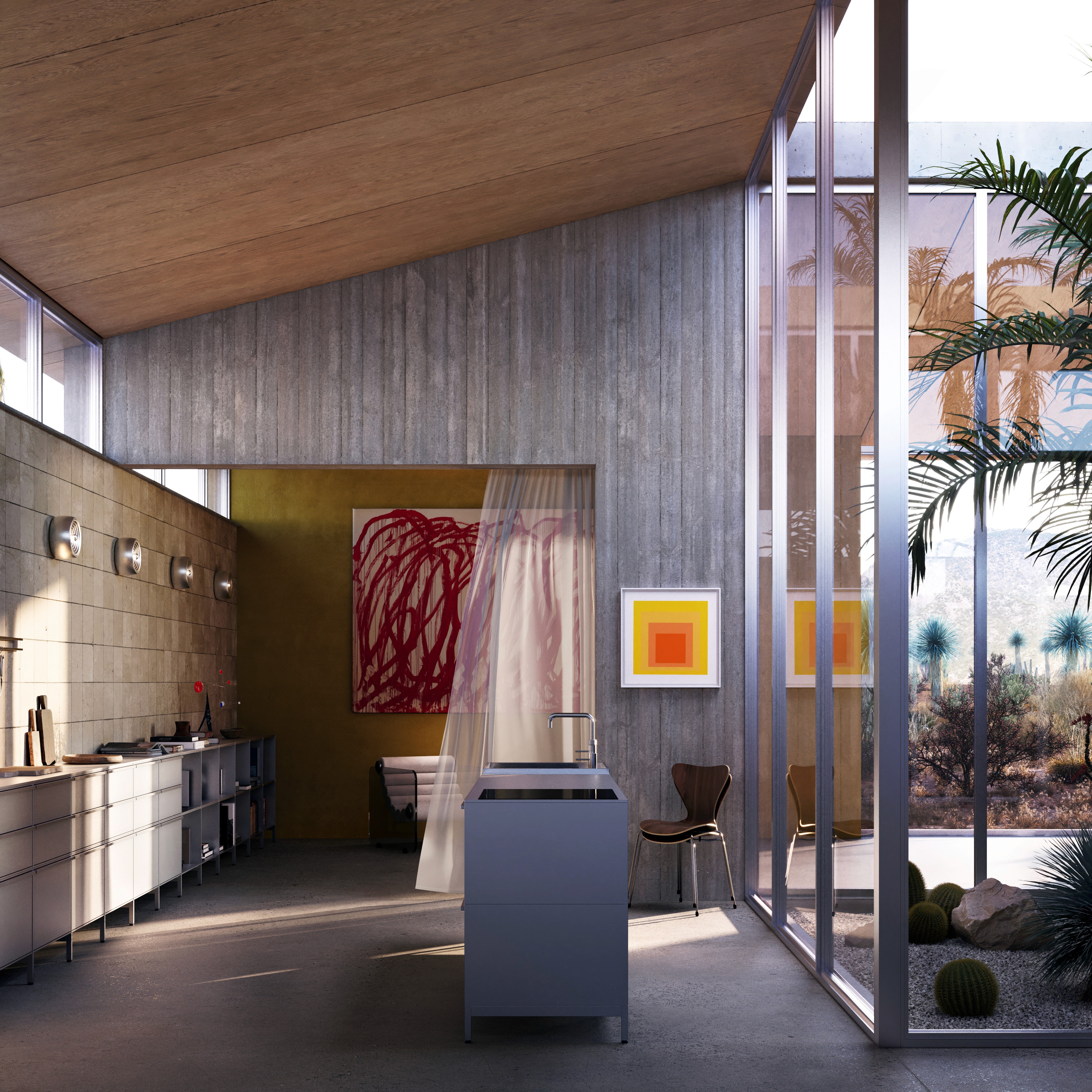
In Stockholm-based designer Cristina Poelk's latest project, an atrium becomes a stage for light and material—where TERMINO's modular aluminum catches and scatters golden hour rays across concrete, wood, and glass.
"An atrium pins the surrounding structure, cradling it in return with walls of concrete and glass. Echoing the mid-century designs it references, it serves doubly as a shelter and a stage. Floor to ceiling windows blur the boundaries between inside and out, framing instead a more deliberate dialogue between the architecture and the environment."
The design draws clear inspiration from Desert Modernism—that Palm Springs-born philosophy where architecture responds to climate rather than fighting it. The principle is simple: work with natural forces to create spaces that are both comfortable and compelling.
Light as Material
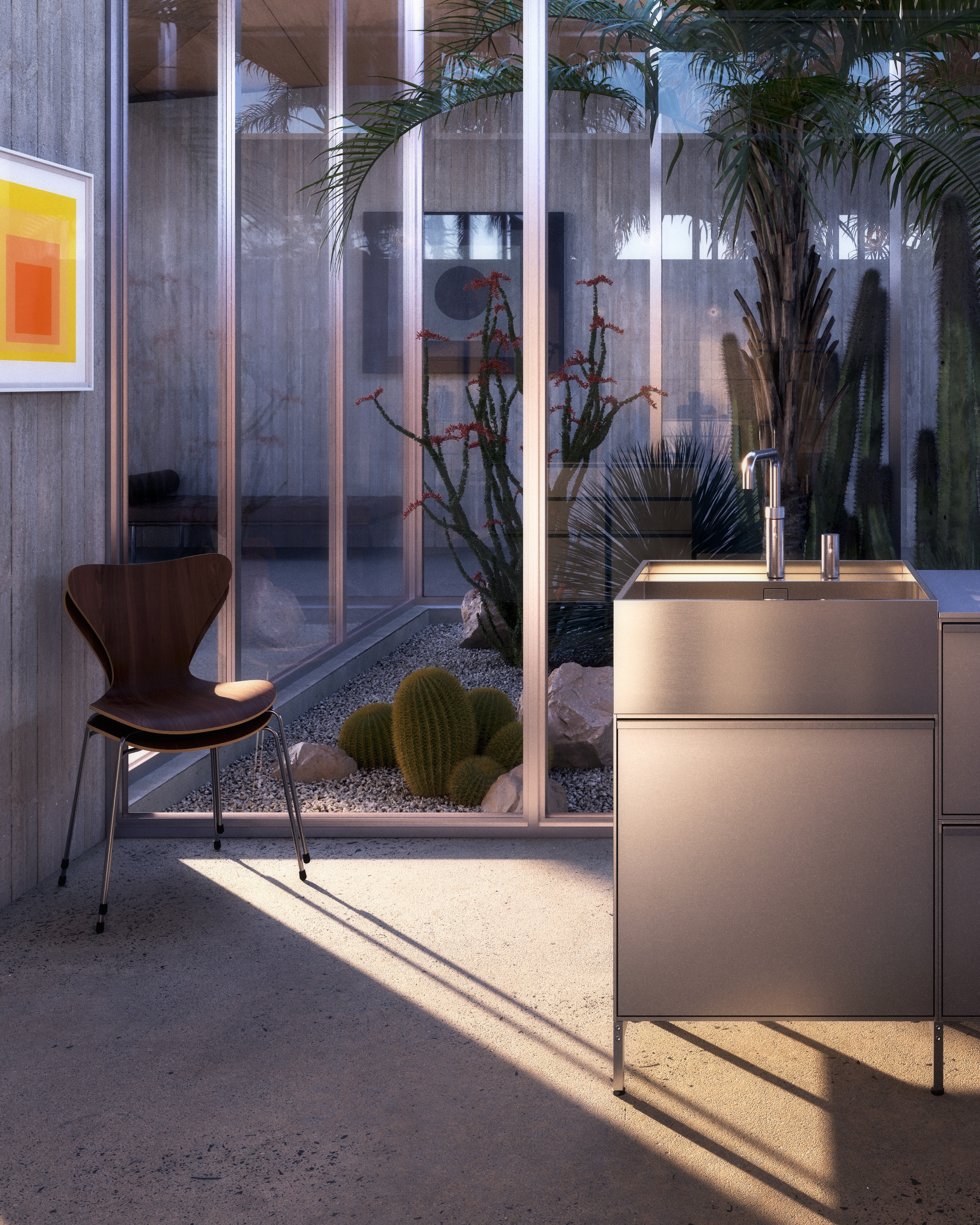
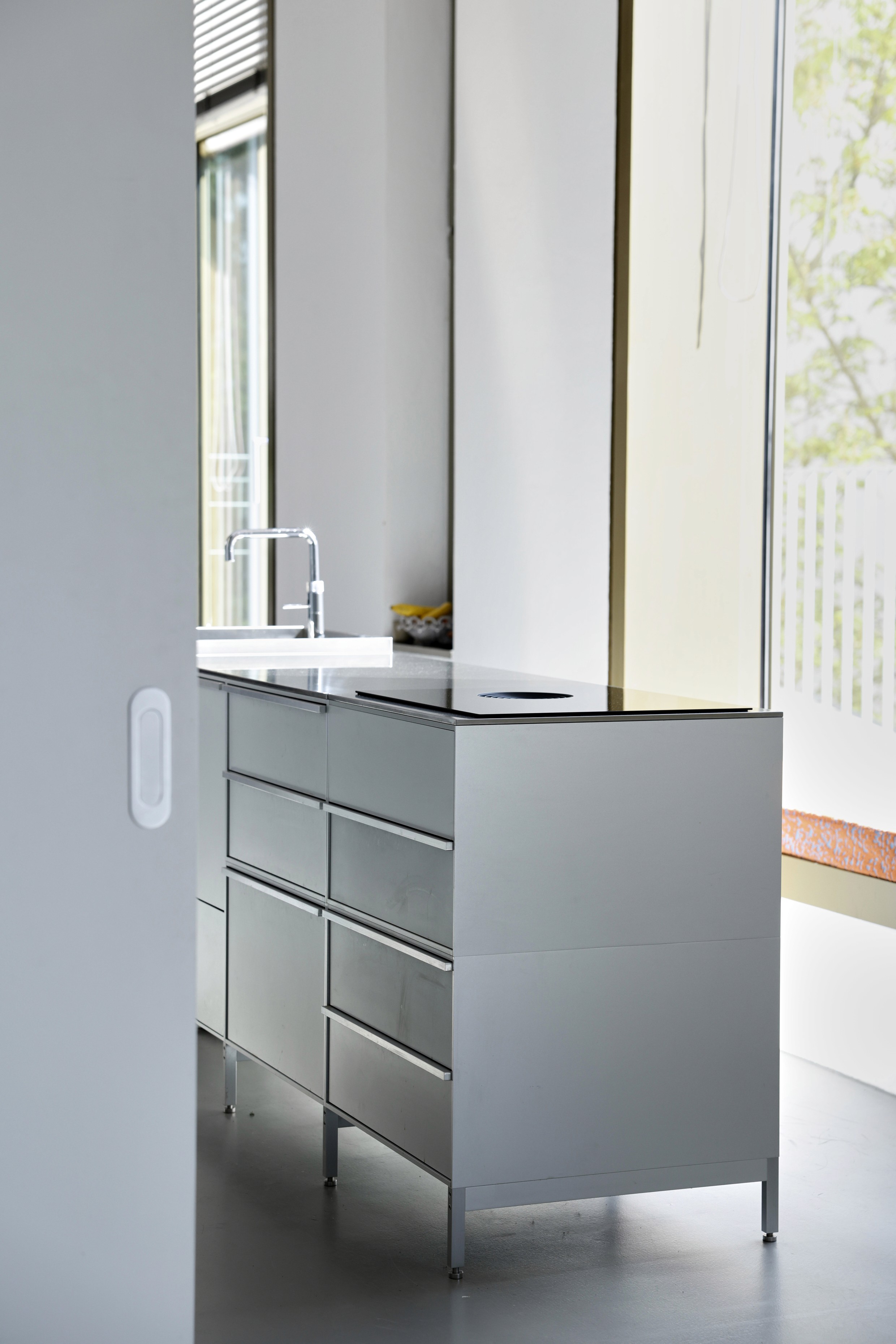
What makes this project particularly interesting is how TERMINO's modules function beyond organisation. The precision-engineered aluminium surfaces—CNC machined, sandblasted, and anodised—interact with natural light in ways that enhance the space's atmospheric qualities.
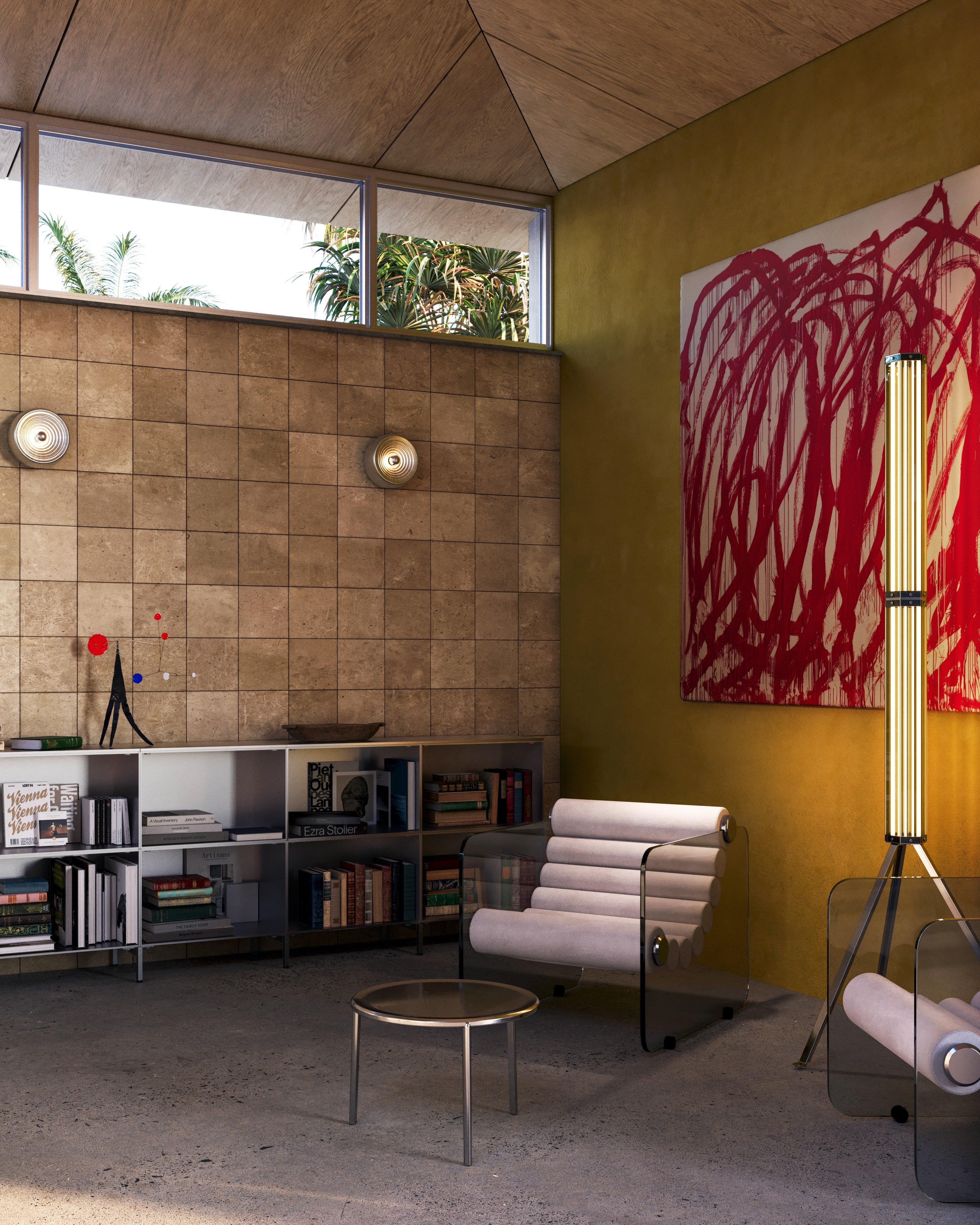
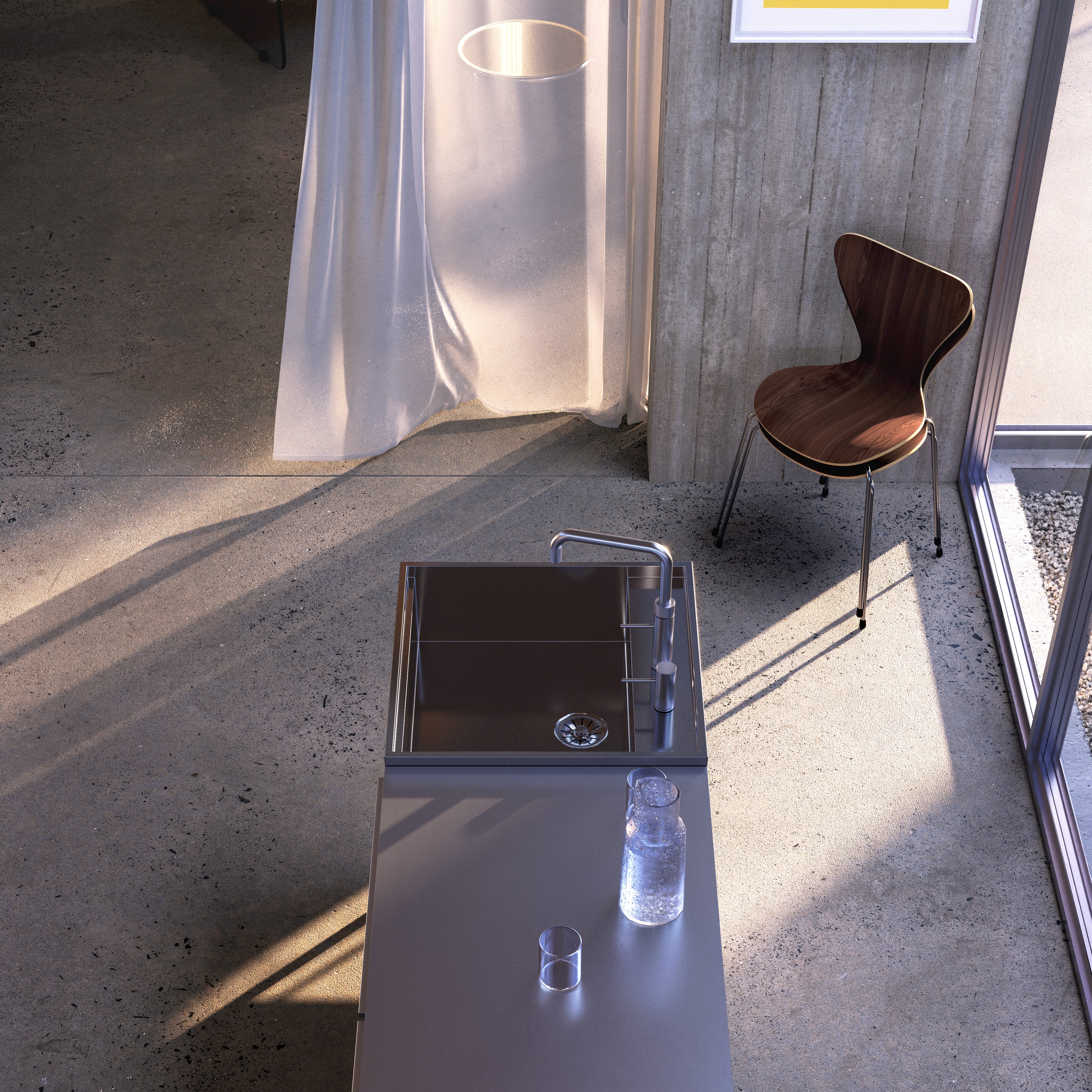
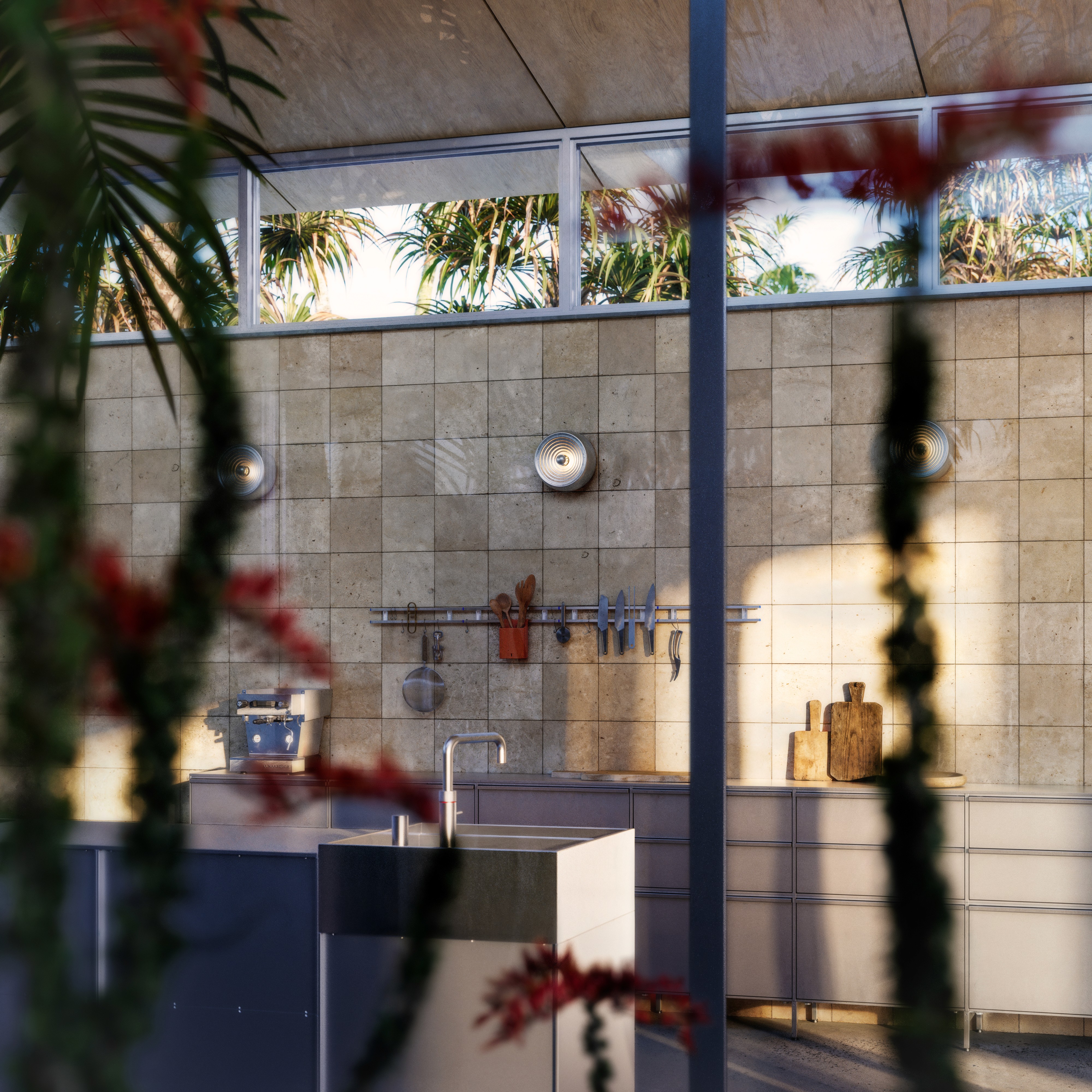
"As the sun sets and the evening light glows golden, the space really comes to life. An ecosystem of materials forms where the TERMINO modules act as a prism, scattering the rays atop the concrete floors, wooden ceiling panels and tiled walls."
The brushed aluminium doesn't just reflect light—it modulates it, creating subtle shifts in the space's character from morning through evening. It's this quality that makes the modules architectural elements rather than just functional pieces.
Material Dialogue
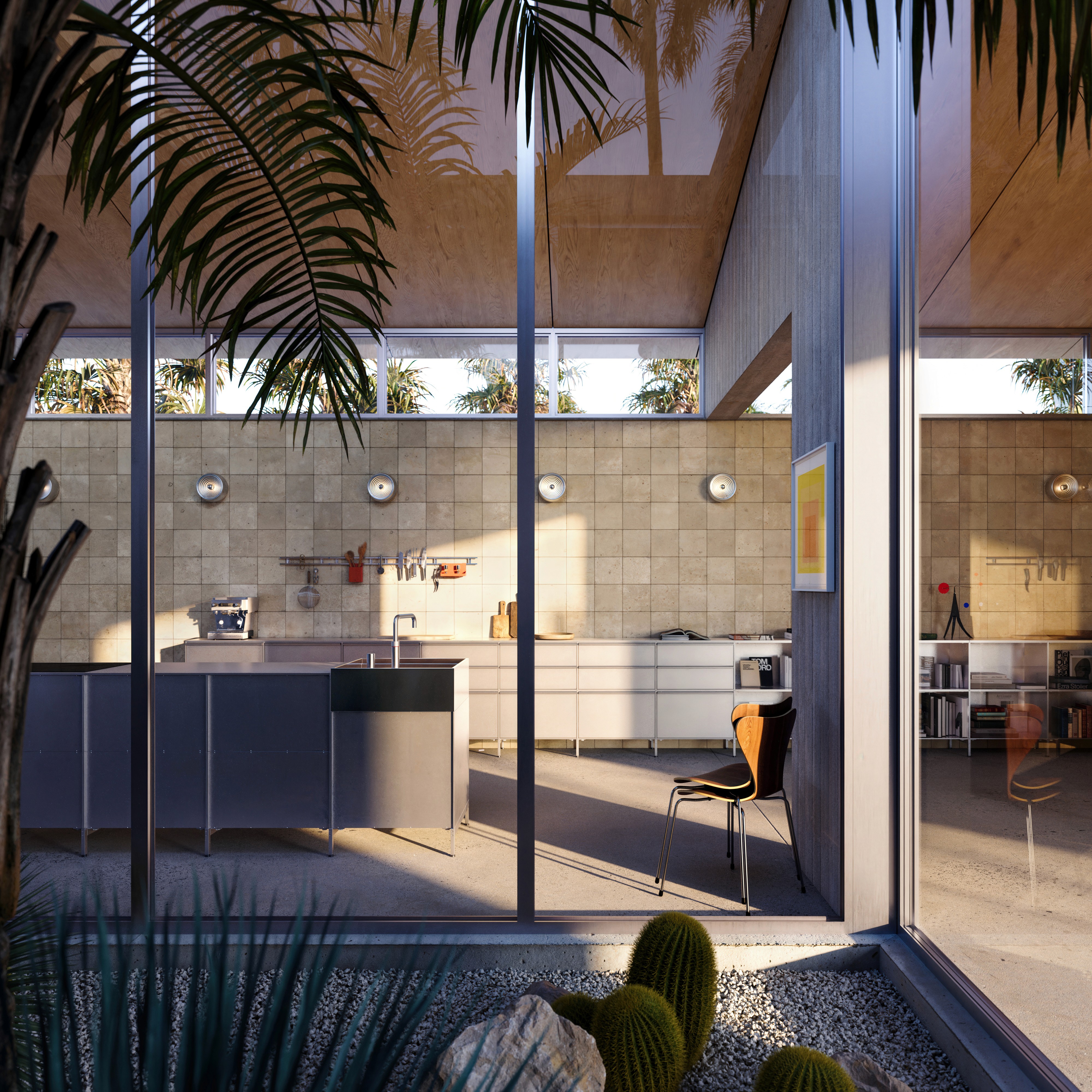
The soul of the project lies in its material palette: concrete, glass, wood, and TERMINO's aluminium working in concert. Each contributes distinct qualities—the warmth of wood, the solidity of concrete, the transparency of glass—while the aluminium modules provide both function and a reflective quality that ties everything together.
"Designed in the spirit of Desert Modernism, the project draws from a lineage of Palm Springs regional icons, where form follows climate, and architecture embraces its environment with a measured grace."
This philosophy aligns naturally with TERMINO's approach, where adaptability serves both functional and aesthetic purposes. The 14 configurable modules offer the flexibility needed for changing requirements while maintaining the material integrity that allows them to contribute meaningfully to a space's atmosphere.
Architecture in Motion
Desert Modernist architects understood that buildings should perform—responding to sun angles, seasonal changes, and daily rhythms. In this atrium, TERMINO modules contribute to this performance, their surfaces catching and redirecting light throughout the day.
The result is a space where practical necessity becomes an opportunity for spatial enhancement. The modules organise function while participating in the environmental story, creating an atmosphere that feels both purposeful and alive.
This is modular design that understands its role within a larger architectural conversation—design that moves with people, adapts to evolving needs, and maintains the quality that makes a space feel intentional. Where the practical and the poetic meet, and where light becomes the medium through which TERMINO's modularity finds its fullest expression.
In Stockholm-based designer Cristina Poelk's latest project, an atrium becomes a stage for light and material—where TERMINO's modular aluminum catches and scatters golden hour rays across concrete, wood, and glass.
"An atrium pins the surrounding structure, cradling it in return with walls of concrete and glass. Echoing the mid-century designs it references, it serves doubly as a shelter and a stage. Floor to ceiling windows blur the boundaries between inside and out, framing instead a more deliberate dialogue between the architecture and the environment."
The design draws clear inspiration from Desert Modernism—that Palm Springs-born philosophy where architecture responds to climate rather than fighting it. The principle is simple: work with natural forces to create spaces that are both comfortable and compelling.
Light as Material
What makes this project particularly interesting is how TERMINO's modules function beyond organisation. The precision-engineered aluminium surfaces—CNC machined, sandblasted, and anodised—interact with natural light in ways that enhance the space's atmospheric qualities.
"As the sun sets and the evening light glows golden, the space really comes to life. An ecosystem of materials forms where the TERMINO modules act as a prism, scattering the rays atop the concrete floors, wooden ceiling panels and tiled walls."
The brushed aluminium doesn't just reflect light—it modulates it, creating subtle shifts in the space's character from morning through evening. It's this quality that makes the modules architectural elements rather than just functional pieces.
Material Dialogue
The soul of the project lies in its material palette: concrete, glass, wood, and TERMINO's aluminium working in concert. Each contributes distinct qualities—the warmth of wood, the solidity of concrete, the transparency of glass—while the aluminium modules provide both function and a reflective quality that ties everything together.
"Designed in the spirit of Desert Modernism, the project draws from a lineage of Palm Springs regional icons, where form follows climate, and architecture embraces its environment with a measured grace."
This philosophy aligns naturally with TERMINO's approach, where adaptability serves both functional and aesthetic purposes. The 14 configurable modules offer the flexibility needed for changing requirements while maintaining the material integrity that allows them to contribute meaningfully to a space's atmosphere.
Architecture in Motion
Desert Modernist architects understood that buildings should perform—responding to sun angles, seasonal changes, and daily rhythms. In this atrium, TERMINO modules contribute to this performance, their surfaces catching and redirecting light throughout the day.
The result is a space where practical necessity becomes an opportunity for spatial enhancement. The modules organise function while participating in the environmental story, creating an atmosphere that feels both purposeful and alive.
This is modular design that understands its role within a larger architectural conversation—design that moves with people, adapts to evolving needs, and maintains the quality that makes a space feel intentional. Where the practical and the poetic meet, and where light becomes the medium through which TERMINO's modularity finds its fullest expression.
In Stockholm-based designer Cristina Poelk's latest project, an atrium becomes a stage for light and material—where TERMINO's modular aluminum catches and scatters golden hour rays across concrete, wood, and glass.
"An atrium pins the surrounding structure, cradling it in return with walls of concrete and glass. Echoing the mid-century designs it references, it serves doubly as a shelter and a stage. Floor to ceiling windows blur the boundaries between inside and out, framing instead a more deliberate dialogue between the architecture and the environment."
The design draws clear inspiration from Desert Modernism—that Palm Springs-born philosophy where architecture responds to climate rather than fighting it. The principle is simple: work with natural forces to create spaces that are both comfortable and compelling.
Light as Material
What makes this project particularly interesting is how TERMINO's modules function beyond organisation. The precision-engineered aluminium surfaces—CNC machined, sandblasted, and anodised—interact with natural light in ways that enhance the space's atmospheric qualities.
"As the sun sets and the evening light glows golden, the space really comes to life. An ecosystem of materials forms where the TERMINO modules act as a prism, scattering the rays atop the concrete floors, wooden ceiling panels and tiled walls."
The brushed aluminium doesn't just reflect light—it modulates it, creating subtle shifts in the space's character from morning through evening. It's this quality that makes the modules architectural elements rather than just functional pieces.
Material Dialogue
The soul of the project lies in its material palette: concrete, glass, wood, and TERMINO's aluminium working in concert. Each contributes distinct qualities—the warmth of wood, the solidity of concrete, the transparency of glass—while the aluminium modules provide both function and a reflective quality that ties everything together.
"Designed in the spirit of Desert Modernism, the project draws from a lineage of Palm Springs regional icons, where form follows climate, and architecture embraces its environment with a measured grace."
This philosophy aligns naturally with TERMINO's approach, where adaptability serves both functional and aesthetic purposes. The 14 configurable modules offer the flexibility needed for changing requirements while maintaining the material integrity that allows them to contribute meaningfully to a space's atmosphere.
Architecture in Motion
Desert Modernist architects understood that buildings should perform—responding to sun angles, seasonal changes, and daily rhythms. In this atrium, TERMINO modules contribute to this performance, their surfaces catching and redirecting light throughout the day.
The result is a space where practical necessity becomes an opportunity for spatial enhancement. The modules organise function while participating in the environmental story, creating an atmosphere that feels both purposeful and alive.
This is modular design that understands its role within a larger architectural conversation—design that moves with people, adapts to evolving needs, and maintains the quality that makes a space feel intentional. Where the practical and the poetic meet, and where light becomes the medium through which TERMINO's modularity finds its fullest expression.

© 2026 TERMINO GmbH · Engineered in Berlin
© 2026 TERMINO GmbH · Engineered in Berlin
© 2026 TERMINO GmbH · Engineered in Berlin