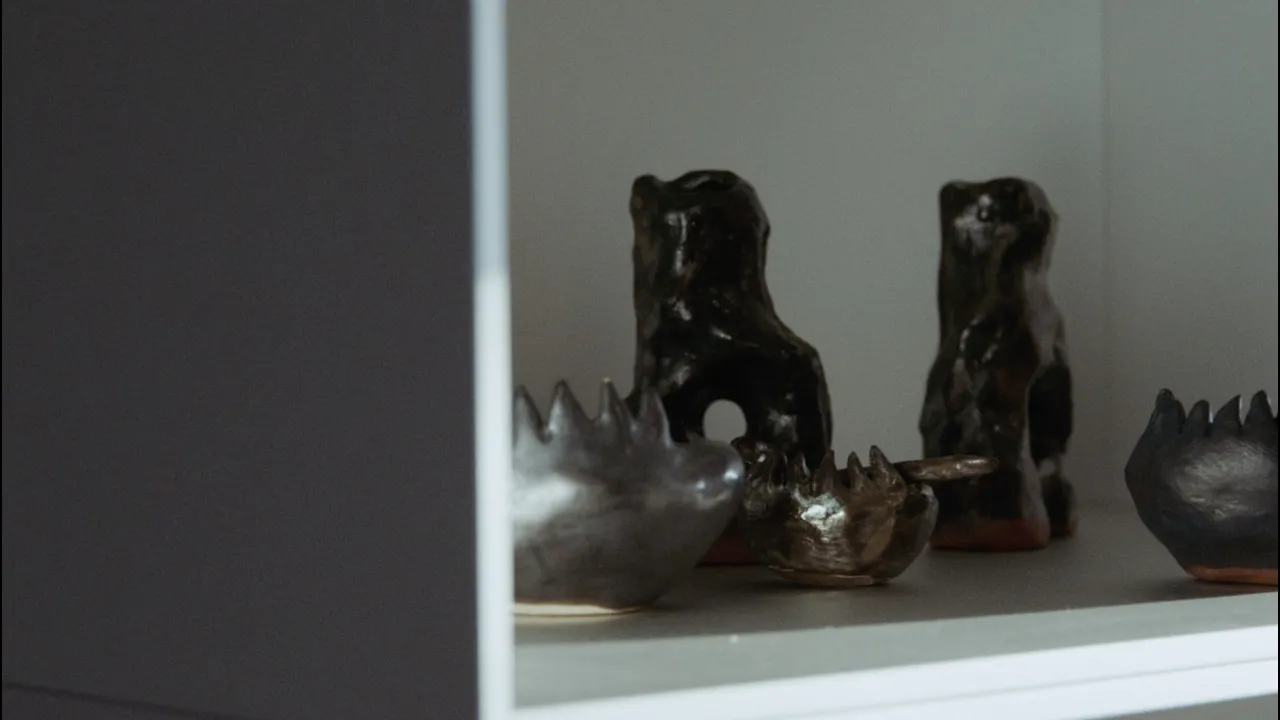
Arina Yanovych on Discomfort as Material
Video by Inman Duyser
In today's consumer culture, objects have become proxies for identity, purchased quickly, replaced just as fast. The resulting decision fatigue has quietly reshaped how we relate to the things we own. The quiet luxury market has responded by returning to something more fundamental: design that does not compromise on quality, durability, or purpose.
Good design is inherently modular. It holds its own across contexts because its value comes from within — not from the spaces or trends that surround it.
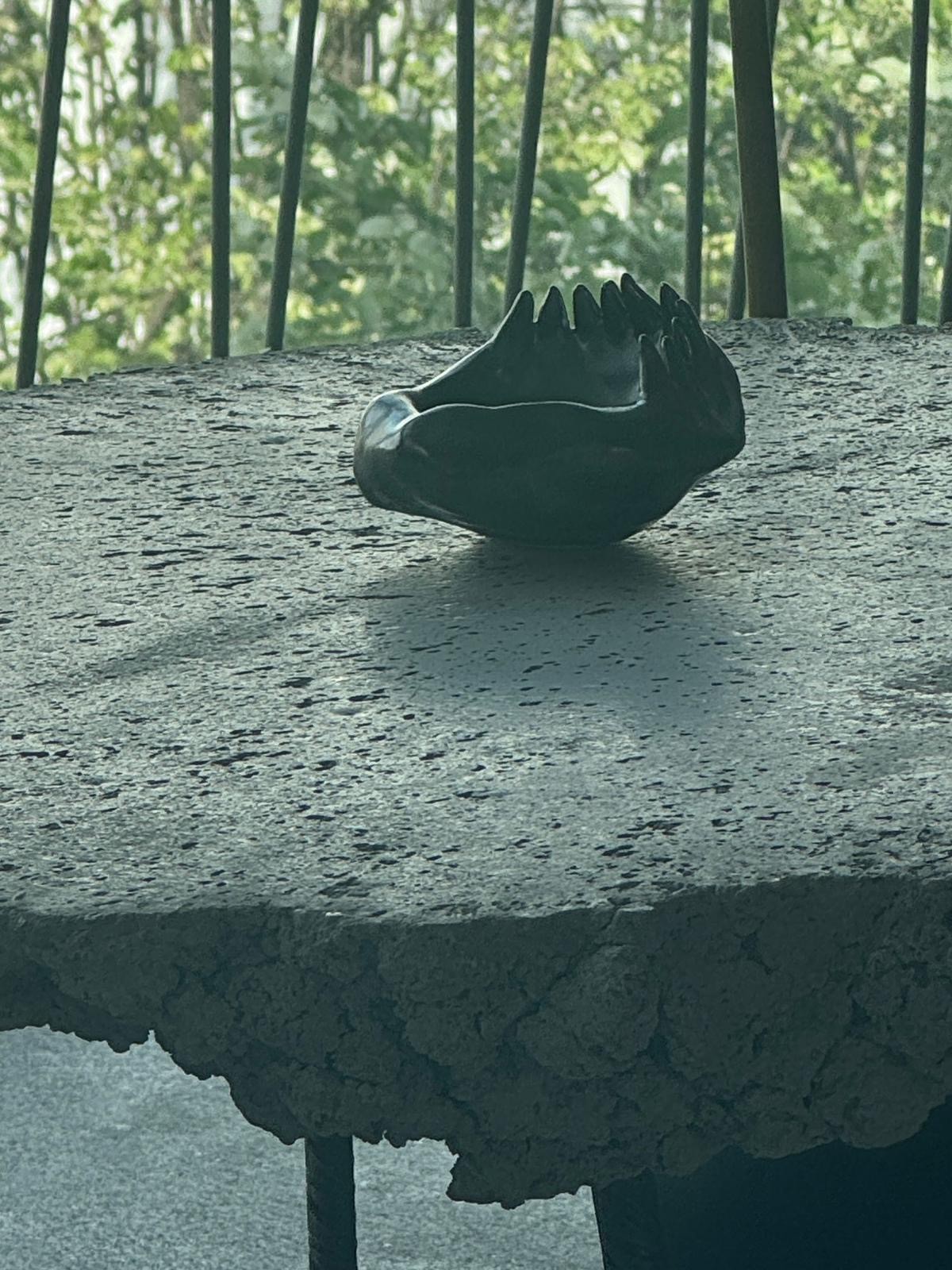
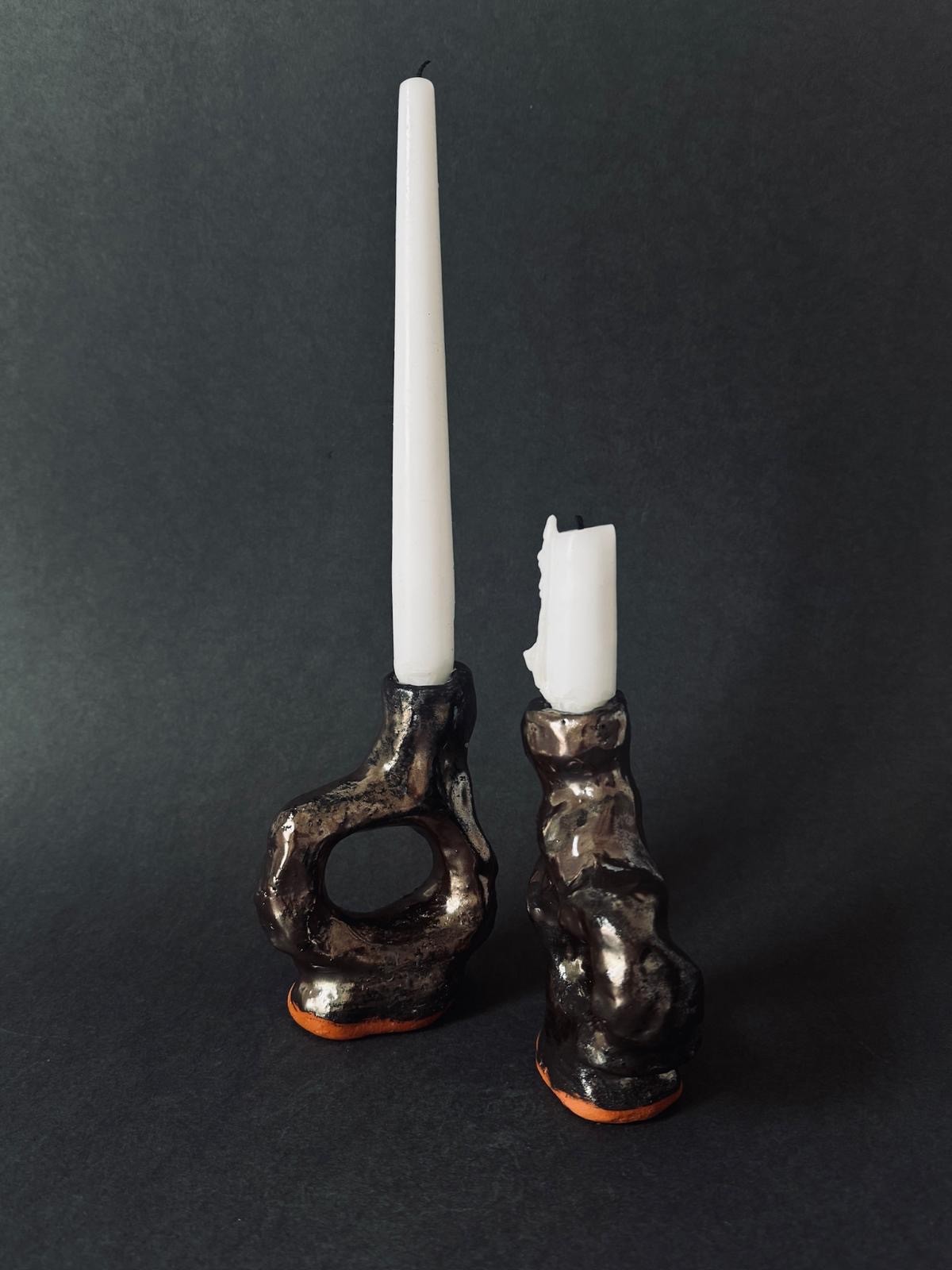
Trained as an architect, she now extends her practice into ceramics, working from Berlin, Arina Yanovych makes vases by hand, often beginning without a fixed outcome in mind. Her process is slow and deliberate, shaped as much by what does not work as by what does.
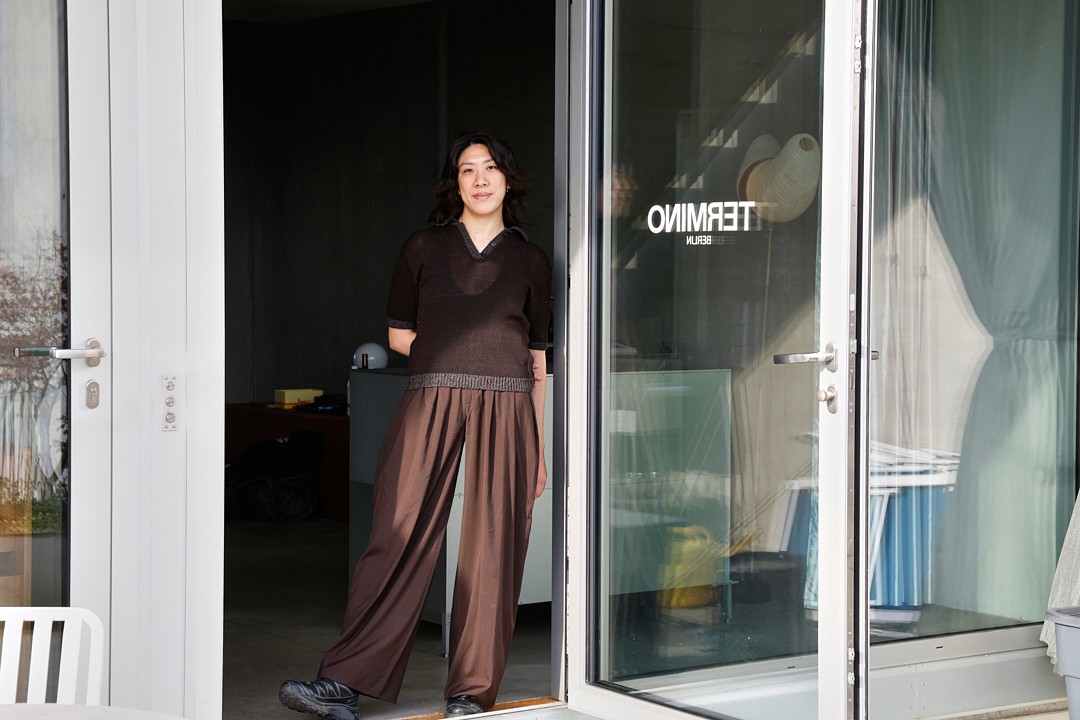
Her recent work for TERMINO's showroom at Terrassenhaus Lobe Block brings that intuitive practice into dialogue with a more structured, design-led environment. Inman Duyser talks to Arina Yanovych about the way she expanded her practice from architecture and screen-based work into the slower, more tactile world of object-making.
With a background in architecture, what drew you toward ceramics as an extension of your practice?
It began with the creative process that accompanied my architectural studies — something that started at school and grew steadily as I entered the working world. Drawing and visual thinking became central to my practice; creativity felt natural rather than optional.
That changed when I moved into full-time work in architecture. The urge to step away from screen-reliant work — something many architects experience — led me to a ceramics studio. The shift toward tactile, handmade work and away from the digital was driven by intuition. It landed me here.
What is your creation process?
Consistency is key. Showing up daily, staying committed to the practice. Each piece is built from scratch with a single tool — I begin with a small cutter and a rough idea of what the next piece will look like.
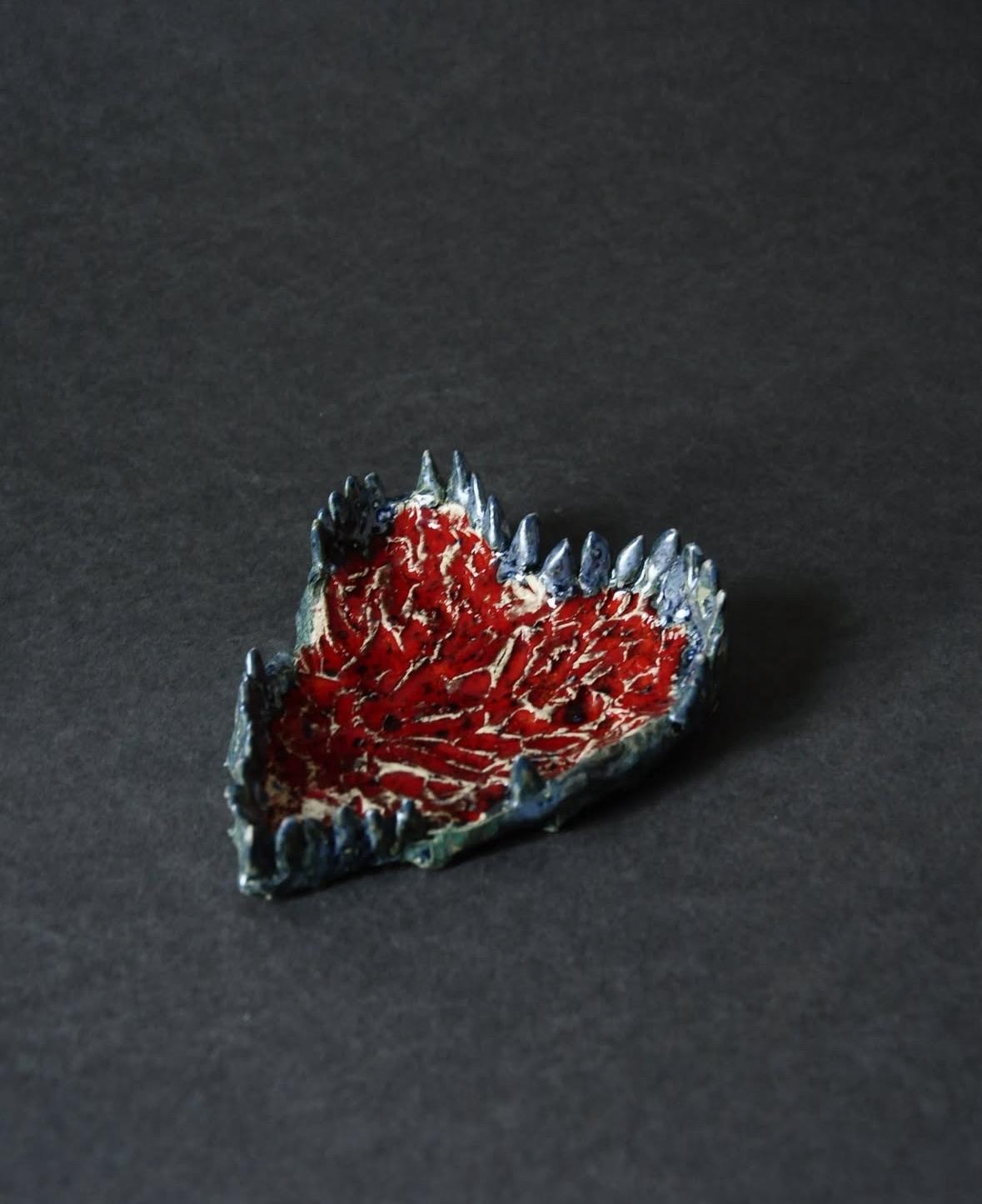
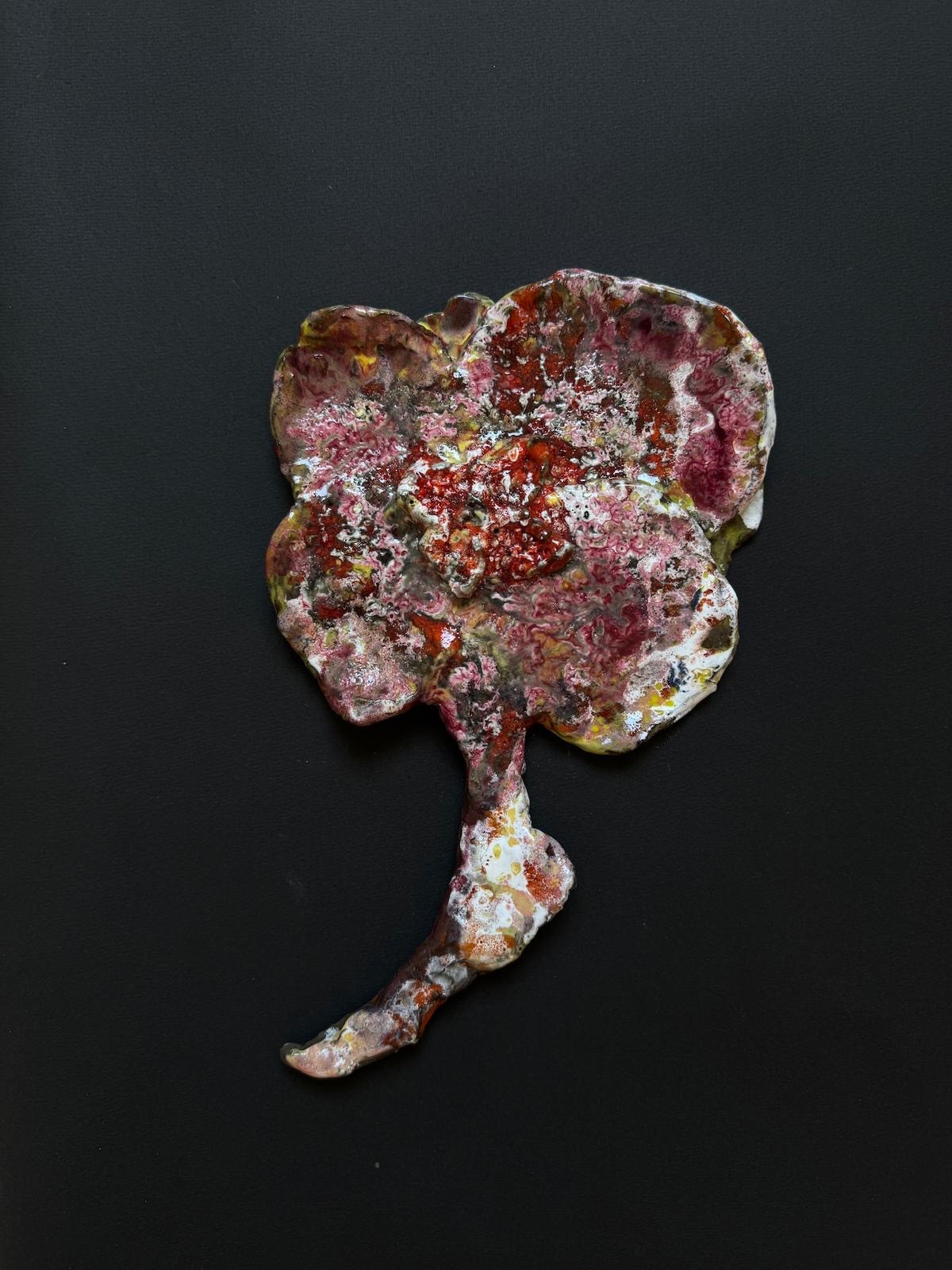
Glazing is an entirely different discipline, almost a science. I use up to ten glazes per object, and a piece can be glazed between one and three times. Essential to the work is knowing when to let go: discarding pieces, starting over, creating distance between an object and myself — even from memories or people. Knowing when to stop is the hardest part.
Where do you find inspiration?
Working with clay has become irreplaceable for me. It is meditation and escapism, and acts as a hobby, a profession, and quality time with myself.
Inner discomfort, exhaustion, dissatisfaction — these are often the driving forces. And there is something rewarding about watching something unexpected take shape.
You have designed pieces specifically for TERMINO’s Berlin showroom — what was your thinking?
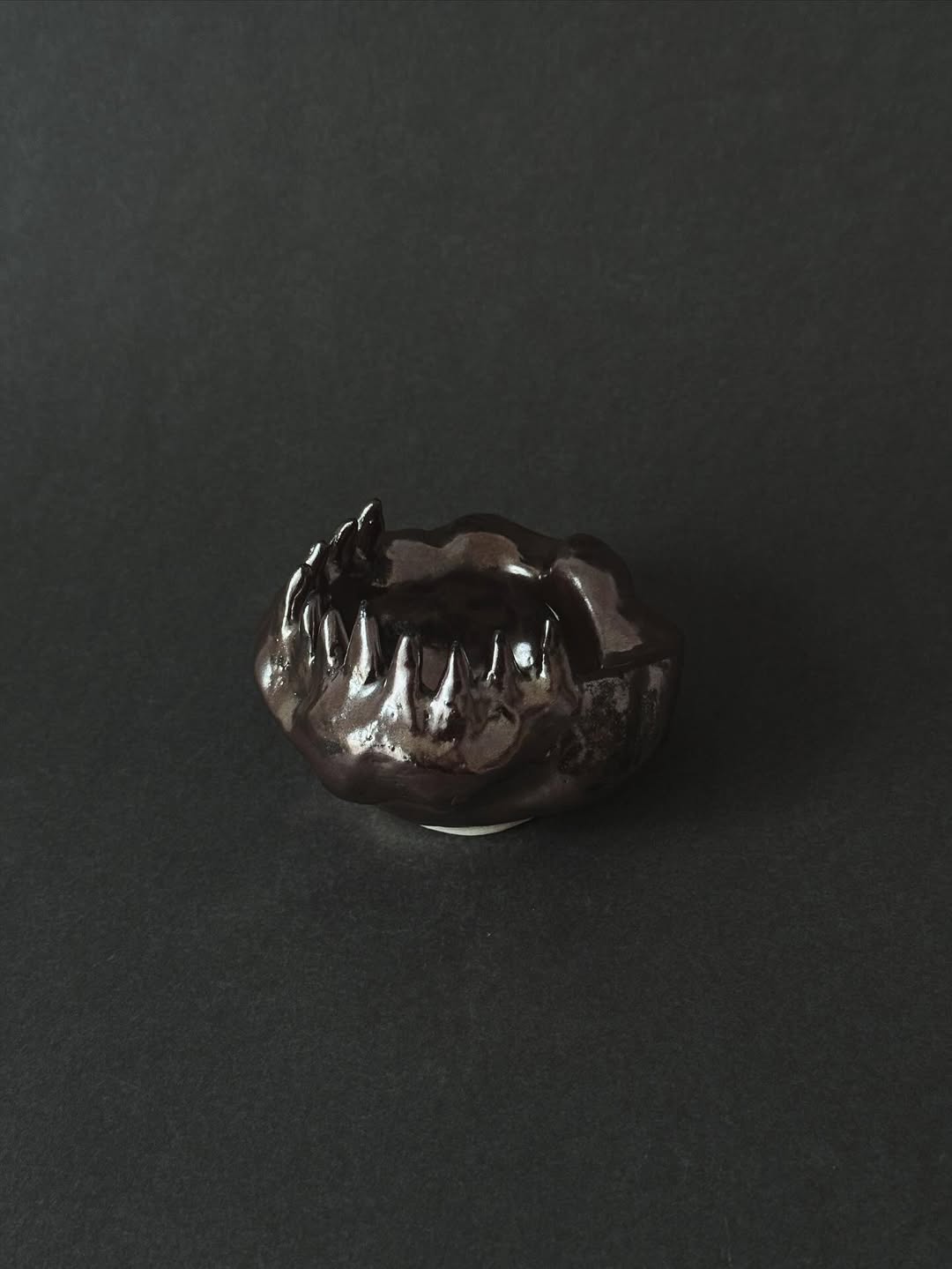
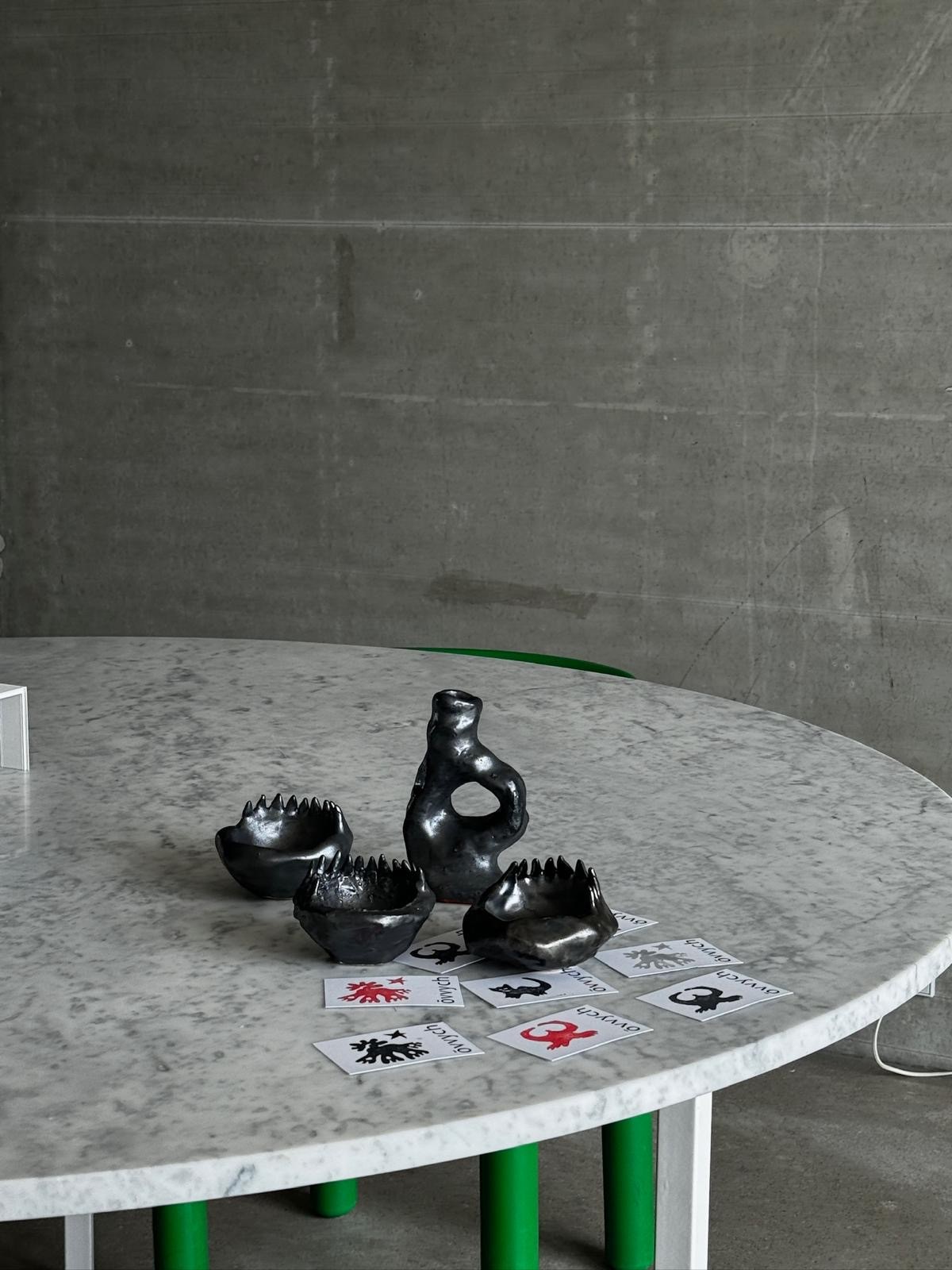
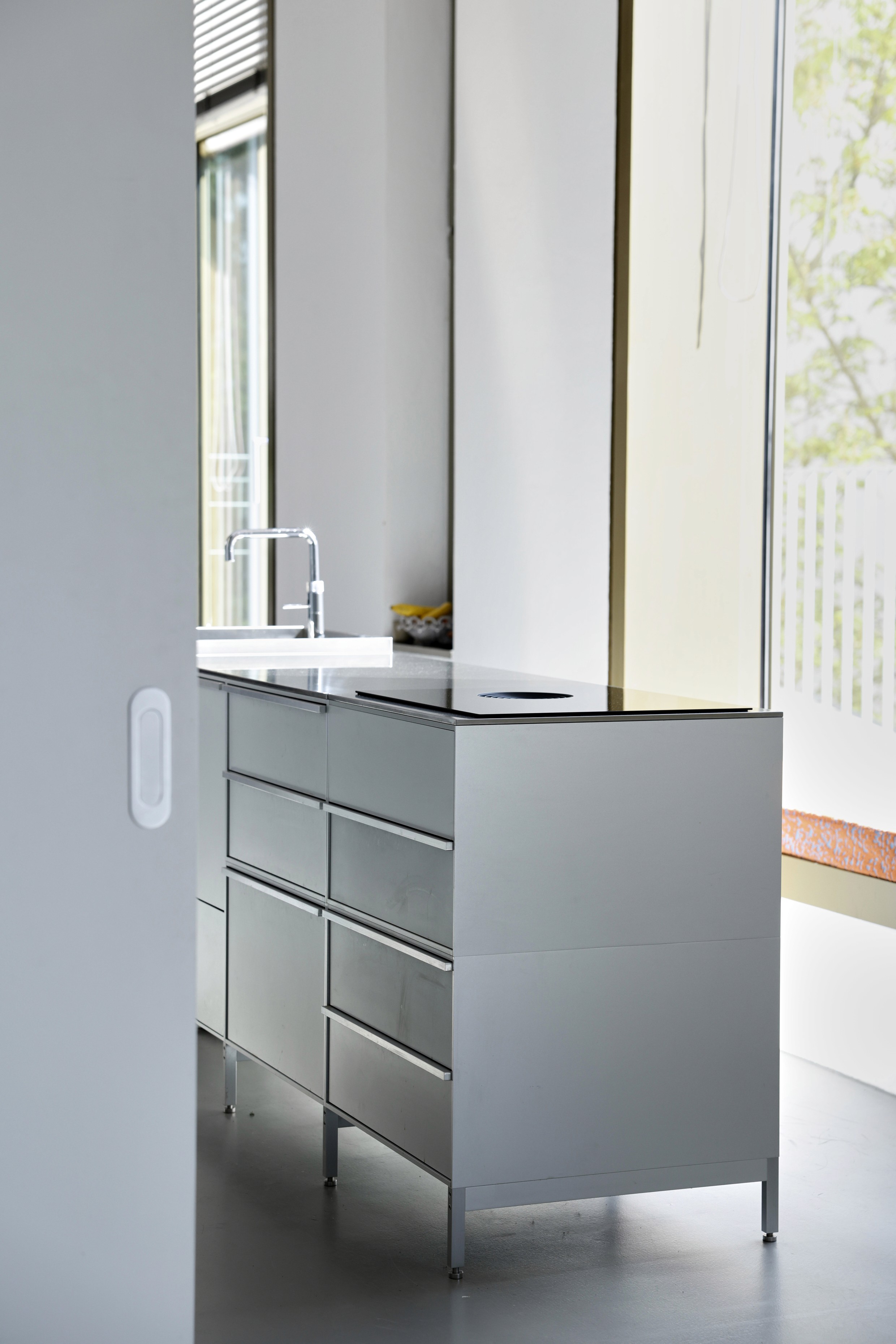
TERMINO operates in a language of precision — clean lines, efficiency, a kind of considered minimalism. My work tends to go the other way. So the question became: how do you bring something imperfect into a space built around exactness without it feeling like a mistake?
That pushed me toward reduction. Simpler forms, more restrained glazing. The pieces needed to belong there — not compete.
How did you discover TERMINO?
Through architecture. My colleague and friend Jolene Lee curated TERMINO's showroom at Terrassenhaus Lobe Block in Wedding. I had worked in that building with Muck Petzet, who designed it together with Arno Brandlhuber.
Some of my most meaningful Berlin memories are connected to that place. Being part of it again, even indirectly, carries personal significance.
Where does your work and TERMINO's philosophy intersect?
It is about objects as part of a long, transformative process. We talk a great deal about flexibility today, but too often it becomes erasure or greenwashing. TERMINO is looking for genuine answers.
Why Berlin?
After stops in Dresden, Zurich, Lausanne, and Kyiv, Berlin feels like home — more emotionally than intellectually.
Berlin offers a constant exchange of emotions, experiences, perspectives. It allows me to live multiple lives simultaneously. The city demands effort, and you have to learn it, question yourself, find your place. There is strength in that process.
Berlin is a built palimpsest: constant destruction and redefinition.That constant reinvention resonates with me both creatively and technically. Redefinition is something we are all required to undergo today, repeatedly asking what exists and how to respond to it. New beginnings are difficult, but the goal is to find a balance between a solid foundation and the willingness to reorder.
Are there other forms or materials you have been wanting to explore?
Collaborations. I am also interested in mixing materials, ceramics with textiles, wire, or stone.
How do you imagine your work evolving?
I hope I never stop experimenting. The moment we believe we have the answer is the moment we begin to stagnate. I hope the world remains kind enough to allow me to pursue this, and that I can continue to follow my intuition, regardless of circumstance.
How would you describe your own work?
A balance between control and surrender. A mix of processes and reflections.
What is currently haunting and driving your practice?
Intuition is the driving force. I am fascinated by theoretical frameworks in design. My "Creature" series, for example, is based on Carl Jung's archetypes. What I find most beautiful is that people always recognise something familiar in these hybrid beings — everyone projects something of their own.
CREDITS
Video
Inman Duyser
Copy Editor
Alma Leandra
Video by Inman Duyser
In today's consumer culture, objects have become proxies for identity, purchased quickly, replaced just as fast. The resulting decision fatigue has quietly reshaped how we relate to the things we own. The quiet luxury market has responded by returning to something more fundamental: design that does not compromise on quality, durability, or purpose.
Good design is inherently modular. It holds its own across contexts because its value comes from within — not from the spaces or trends that surround it.
Trained as an architect, she now extends her practice into ceramics, working from Berlin, Arina Yanovych makes vases by hand, often beginning without a fixed outcome in mind. Her process is slow and deliberate, shaped as much by what does not work as by what does.
Her recent work for TERMINO's showroom at Terrassenhaus Lobe Block brings that intuitive practice into dialogue with a more structured, design-led environment. Inman Duyser talks to Arina Yanovych about the way she expanded her practice from architecture and screen-based work into the slower, more tactile world of object-making.
With a background in architecture, what drew you toward ceramics as an extension of your practice?
It began with the creative process that accompanied my architectural studies — something that started at school and grew steadily as I entered the working world. Drawing and visual thinking became central to my practice; creativity felt natural rather than optional.
That changed when I moved into full-time work in architecture. The urge to step away from screen-reliant work — something many architects experience — led me to a ceramics studio. The shift toward tactile, handmade work and away from the digital was driven by intuition. It landed me here.
What is your creation process?
Consistency is key. Showing up daily, staying committed to the practice. Each piece is built from scratch with a single tool — I begin with a small cutter and a rough idea of what the next piece will look like.
Glazing is an entirely different discipline, almost a science. I use up to ten glazes per object, and a piece can be glazed between one and three times. Essential to the work is knowing when to let go: discarding pieces, starting over, creating distance between an object and myself — even from memories or people. Knowing when to stop is the hardest part.
Where do you find inspiration?
Working with clay has become irreplaceable for me. It is meditation and escapism, and acts as a hobby, a profession, and quality time with myself.
Inner discomfort, exhaustion, dissatisfaction — these are often the driving forces. And there is something rewarding about watching something unexpected take shape.
You have designed pieces specifically for TERMINO’s Berlin showroom — what was your thinking?
TERMINO operates in a language of precision — clean lines, efficiency, a kind of considered minimalism. My work tends to go the other way. So the question became: how do you bring something imperfect into a space built around exactness without it feeling like a mistake?
That pushed me toward reduction. Simpler forms, more restrained glazing. The pieces needed to belong there — not compete.
How did you discover TERMINO?
Through architecture. My colleague and friend Jolene Lee curated TERMINO's showroom at Terrassenhaus Lobe Block in Wedding. I had worked in that building with Muck Petzet, who designed it together with Arno Brandlhuber.
Some of my most meaningful Berlin memories are connected to that place. Being part of it again, even indirectly, carries personal significance.
Where does your work and TERMINO's philosophy intersect?
It is about objects as part of a long, transformative process. We talk a great deal about flexibility today, but too often it becomes erasure or greenwashing. TERMINO is looking for genuine answers.
Why Berlin?
After stops in Dresden, Zurich, Lausanne, and Kyiv, Berlin feels like home — more emotionally than intellectually.
Berlin offers a constant exchange of emotions, experiences, perspectives. It allows me to live multiple lives simultaneously. The city demands effort, and you have to learn it, question yourself, find your place. There is strength in that process.
Berlin is a built palimpsest: constant destruction and redefinition.That constant reinvention resonates with me both creatively and technically. Redefinition is something we are all required to undergo today, repeatedly asking what exists and how to respond to it. New beginnings are difficult, but the goal is to find a balance between a solid foundation and the willingness to reorder.
Are there other forms or materials you have been wanting to explore?
Collaborations. I am also interested in mixing materials, ceramics with textiles, wire, or stone.
How do you imagine your work evolving?
I hope I never stop experimenting. The moment we believe we have the answer is the moment we begin to stagnate. I hope the world remains kind enough to allow me to pursue this, and that I can continue to follow my intuition, regardless of circumstance.
How would you describe your own work?
A balance between control and surrender. A mix of processes and reflections.
What is currently haunting and driving your practice?
Intuition is the driving force. I am fascinated by theoretical frameworks in design. My "Creature" series, for example, is based on Carl Jung's archetypes. What I find most beautiful is that people always recognise something familiar in these hybrid beings — everyone projects something of their own.
CREDITS
Video
Inman Duyser
Copy Editor
Alma Leandra
Video by Inman Duyser
In today's consumer culture, objects have become proxies for identity, purchased quickly, replaced just as fast. The resulting decision fatigue has quietly reshaped how we relate to the things we own. The quiet luxury market has responded by returning to something more fundamental: design that does not compromise on quality, durability, or purpose.
Good design is inherently modular. It holds its own across contexts because its value comes from within — not from the spaces or trends that surround it.
Trained as an architect, she now extends her practice into ceramics, working from Berlin, Arina Yanovych makes vases by hand, often beginning without a fixed outcome in mind. Her process is slow and deliberate, shaped as much by what does not work as by what does.
Her recent work for TERMINO's showroom at Terrassenhaus Lobe Block brings that intuitive practice into dialogue with a more structured, design-led environment. Inman Duyser talks to Arina Yanovych about the way she expanded her practice from architecture and screen-based work into the slower, more tactile world of object-making.
With a background in architecture, what drew you toward ceramics as an extension of your practice?
It began with the creative process that accompanied my architectural studies — something that started at school and grew steadily as I entered the working world. Drawing and visual thinking became central to my practice; creativity felt natural rather than optional.
That changed when I moved into full-time work in architecture. The urge to step away from screen-reliant work — something many architects experience — led me to a ceramics studio. The shift toward tactile, handmade work and away from the digital was driven by intuition. It landed me here.
What is your creation process?
Consistency is key. Showing up daily, staying committed to the practice. Each piece is built from scratch with a single tool — I begin with a small cutter and a rough idea of what the next piece will look like.
Glazing is an entirely different discipline, almost a science. I use up to ten glazes per object, and a piece can be glazed between one and three times. Essential to the work is knowing when to let go: discarding pieces, starting over, creating distance between an object and myself — even from memories or people. Knowing when to stop is the hardest part.
Where do you find inspiration?
Working with clay has become irreplaceable for me. It is meditation and escapism, and acts as a hobby, a profession, and quality time with myself.
Inner discomfort, exhaustion, dissatisfaction — these are often the driving forces. And there is something rewarding about watching something unexpected take shape.
You have designed pieces specifically for TERMINO’s Berlin showroom — what was your thinking?
TERMINO operates in a language of precision — clean lines, efficiency, a kind of considered minimalism. My work tends to go the other way. So the question became: how do you bring something imperfect into a space built around exactness without it feeling like a mistake?
That pushed me toward reduction. Simpler forms, more restrained glazing. The pieces needed to belong there — not compete.
How did you discover TERMINO?
Through architecture. My colleague and friend Jolene Lee curated TERMINO's showroom at Terrassenhaus Lobe Block in Wedding. I had worked in that building with Muck Petzet, who designed it together with Arno Brandlhuber.
Some of my most meaningful Berlin memories are connected to that place. Being part of it again, even indirectly, carries personal significance.
Where does your work and TERMINO's philosophy intersect?
It is about objects as part of a long, transformative process. We talk a great deal about flexibility today, but too often it becomes erasure or greenwashing. TERMINO is looking for genuine answers.
Why Berlin?
After stops in Dresden, Zurich, Lausanne, and Kyiv, Berlin feels like home — more emotionally than intellectually.
Berlin offers a constant exchange of emotions, experiences, perspectives. It allows me to live multiple lives simultaneously. The city demands effort, and you have to learn it, question yourself, find your place. There is strength in that process.
Berlin is a built palimpsest: constant destruction and redefinition.That constant reinvention resonates with me both creatively and technically. Redefinition is something we are all required to undergo today, repeatedly asking what exists and how to respond to it. New beginnings are difficult, but the goal is to find a balance between a solid foundation and the willingness to reorder.
Are there other forms or materials you have been wanting to explore?
Collaborations. I am also interested in mixing materials, ceramics with textiles, wire, or stone.
How do you imagine your work evolving?
I hope I never stop experimenting. The moment we believe we have the answer is the moment we begin to stagnate. I hope the world remains kind enough to allow me to pursue this, and that I can continue to follow my intuition, regardless of circumstance.
How would you describe your own work?
A balance between control and surrender. A mix of processes and reflections.
What is currently haunting and driving your practice?
Intuition is the driving force. I am fascinated by theoretical frameworks in design. My "Creature" series, for example, is based on Carl Jung's archetypes. What I find most beautiful is that people always recognise something familiar in these hybrid beings — everyone projects something of their own.
CREDITS
Video
Inman Duyser
Copy Editor
Alma Leandra

© 2026 Termino GmbH — Engineered in Berlin.
© 2026 Termino GmbH — Engineered in Berlin.
© 2026 Termino GmbH — Engineered in Berlin.