Loft Type C: A Framework for Slower Living
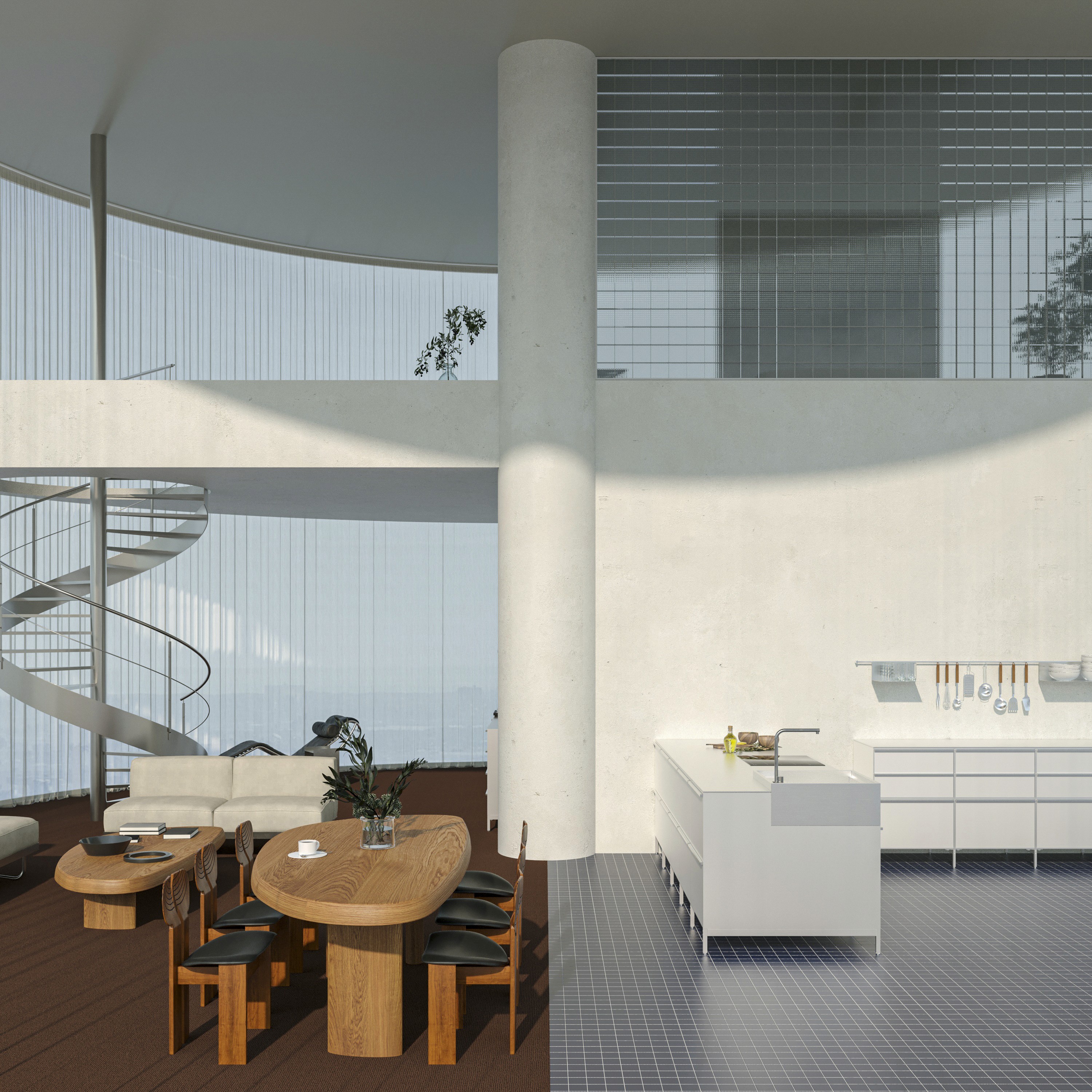
The latest in our SPACES series, Loft Type C is a high-altitude loft renovation by spatial designer Christine Espinal, visualised by Maryna Korak. Set above the city, the space balances cool precision with lived-in softness—minimalist but not sterile; sculptural without being showy.
A Language of Space and Silence
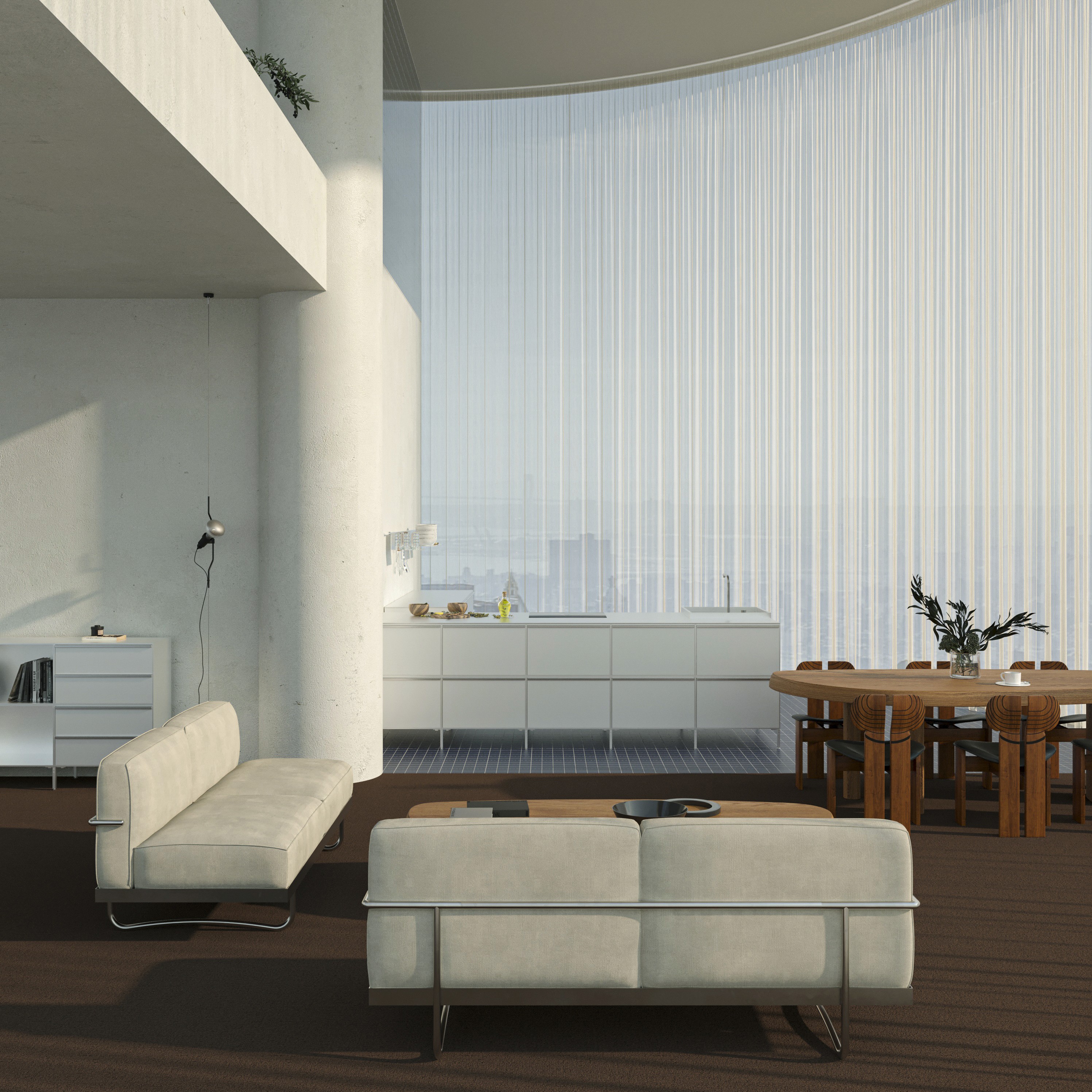
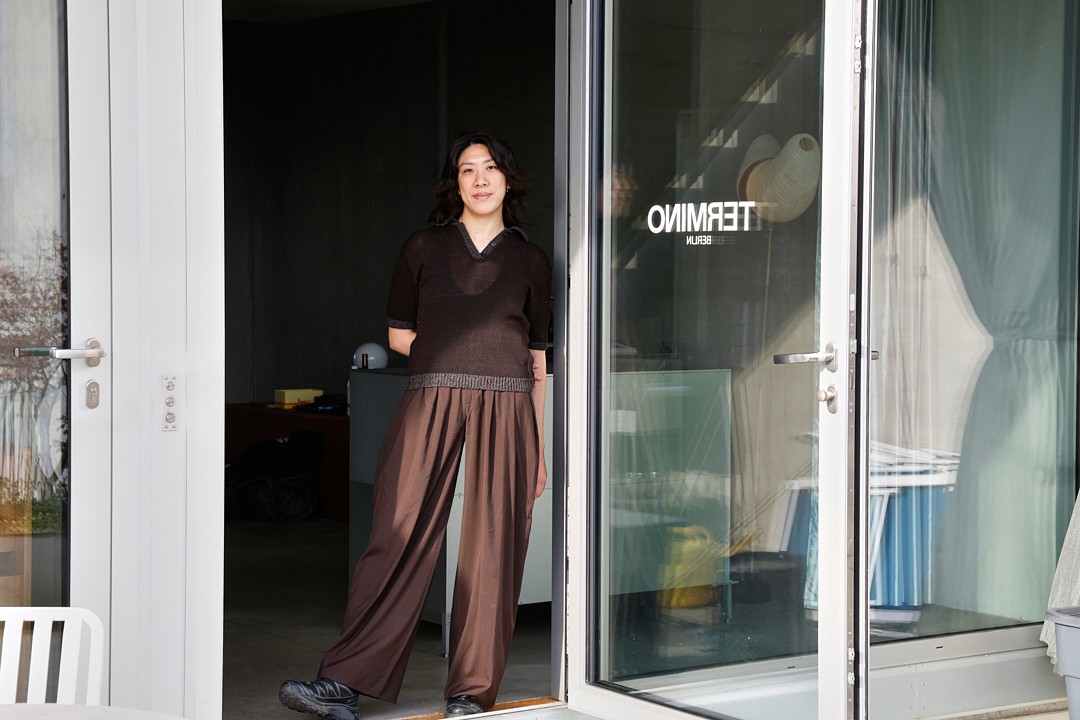
Espinal’s approach is both architectural and atmospheric. Every decision—material, proportion, light—feels considered but not overworked. The layout is open, but not loose. Boundaries between rooms are suggested, never enforced. Curved walls guide you gently rather than direct you. Soft gauze curtains stretch across the full height of the glass, muting the view into a shifting pale gradient. The effect is calming, almost cinematic.
Modules as Architecture
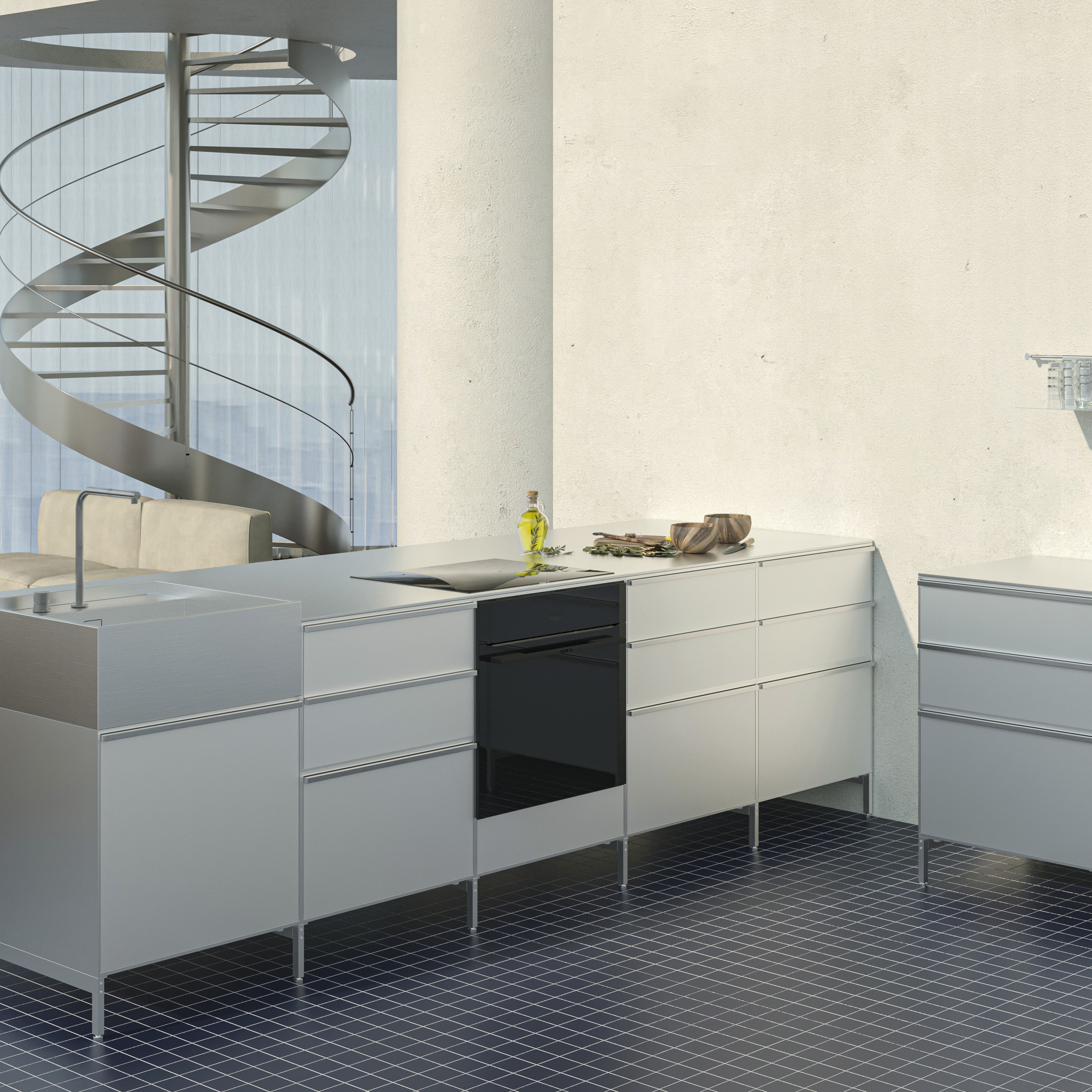
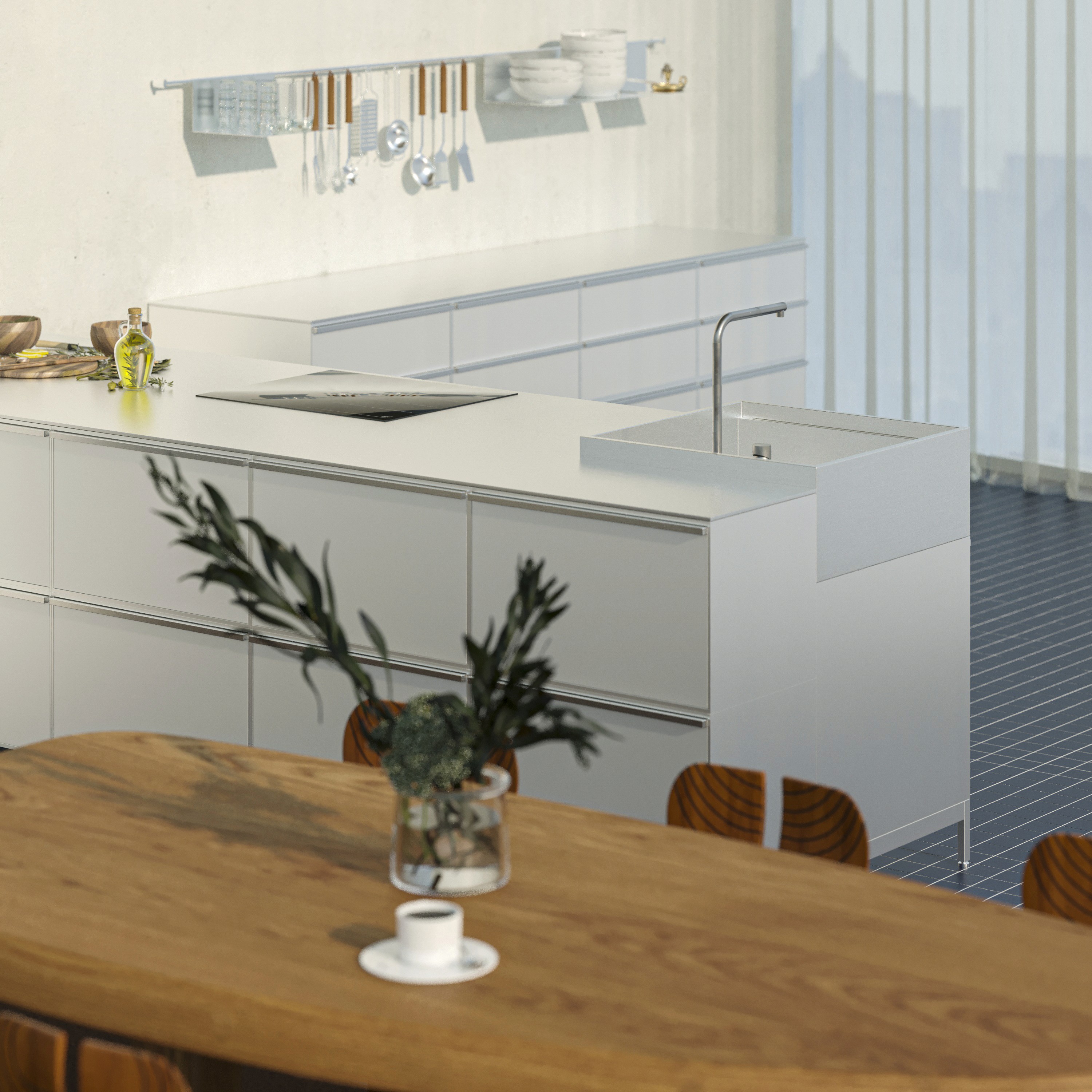
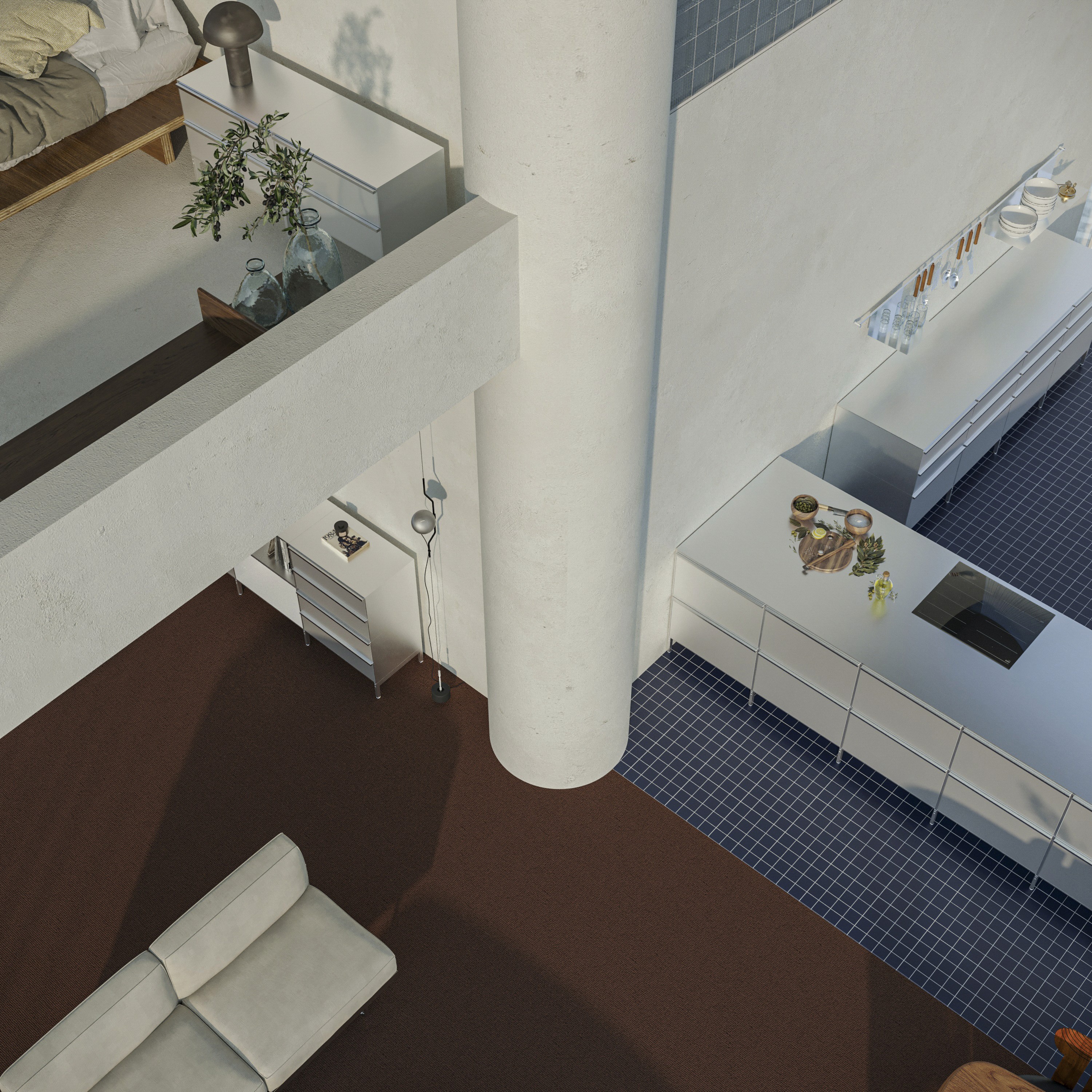
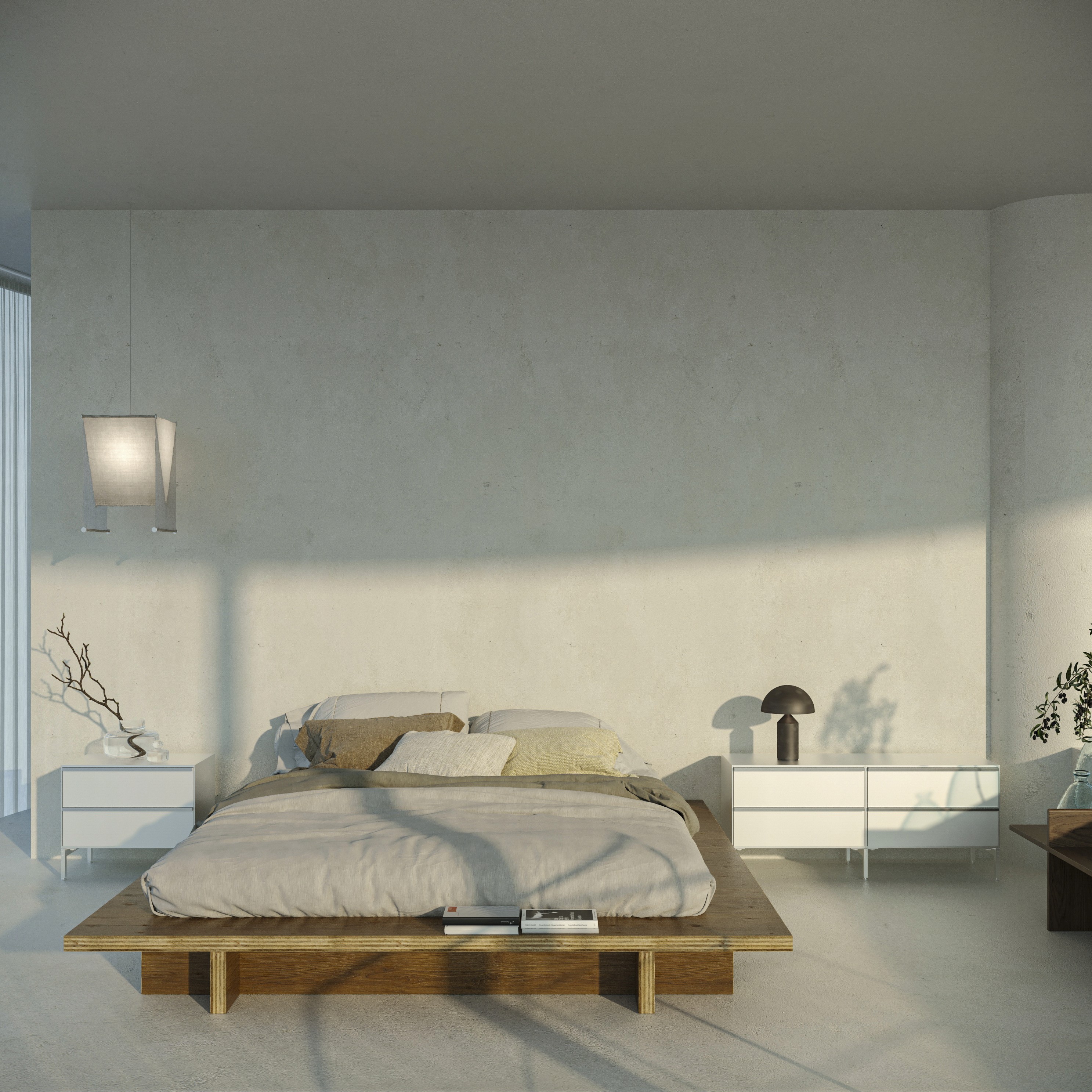
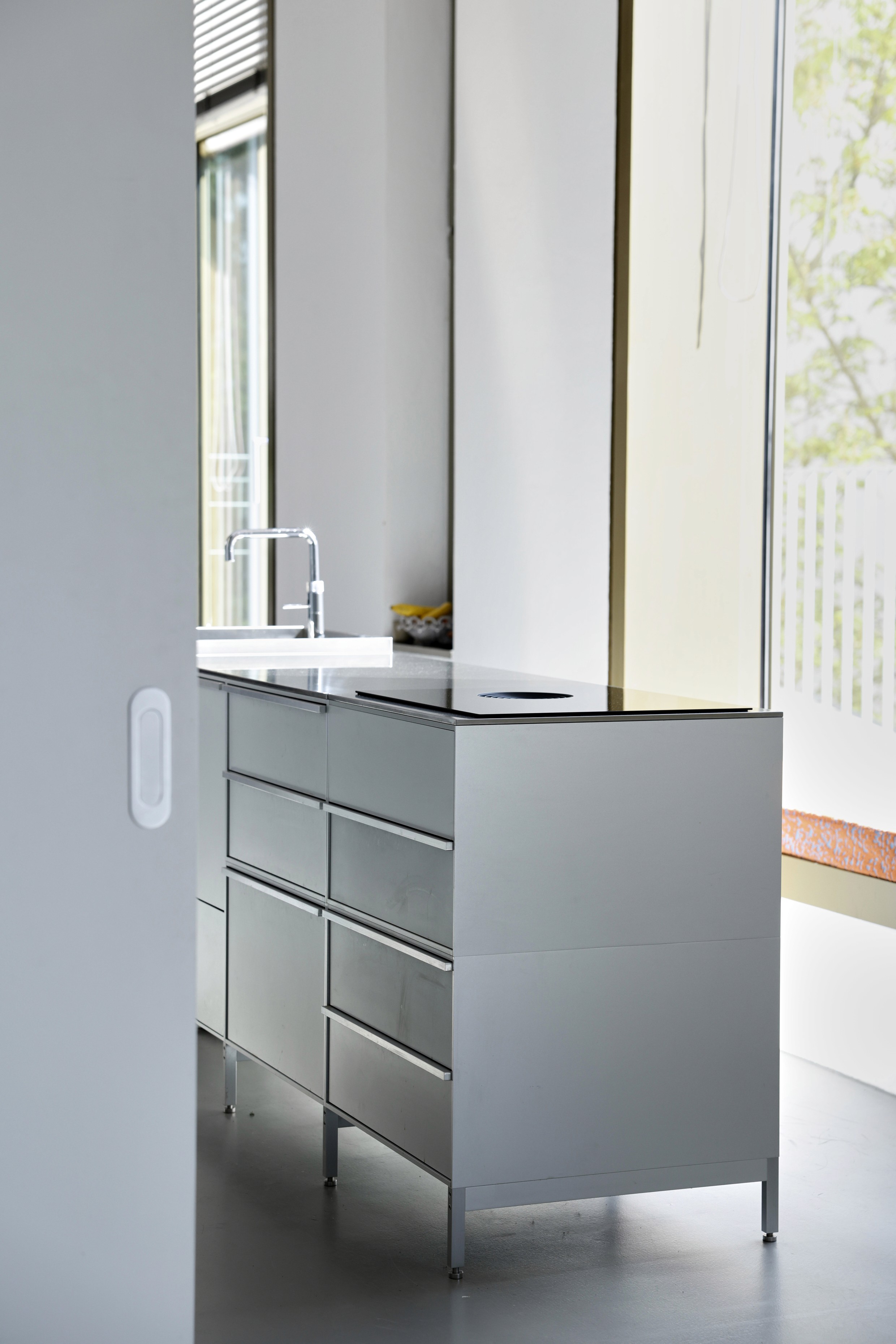
TERMINO modules are used throughout—not as statements, but as part of the architecture. A kitchen island sits on a deep blue tiled grid, flanked by seamless storage walls in the same brushed Aluminium finish. The modules extend quietly into the living and sleeping zones, where they take on new roles: a media console here, a bedside table there. There’s no visual hierarchy—no insistence that any one piece is the focal point. Instead, they fold into the rhythms of the space.
A Room that Breathes
That rhythm is slow and deliberate. Light moves through the loft gradually, casting long lines and soft shadows across the floor. The materials pick up on this stillness—earth-toned carpet underfoot, pale render on the walls, matte oak furniture anchoring the room. The dining table, heavy and low-slung, acts as a kind of centrepiece. Not decorative, but deeply present. It's the kind of furniture that makes you want to sit a little longer than planned.
Atmosphere in the Details
There’s no showpiece here—no object trying to sell you an idea. What you’re left with is the space itself: how it holds light, how it shifts through the day, how it invites different ways of being.
Espinal’s renovation is more about continuity than transformation. There’s no design ‘move’ being made. It’s quieter than that—more about letting the space speak for itself. In that sense, the TERMINO system isn’t decoration or statement. It’s infrastructure. A flexible framework for daily life. A kind of modular calm.
Loft Type C is proof that modular systems don’t need to feel mechanical. That flexibility doesn’t require compromise. And that design, when done with care, can be both invisible and essential.
The latest in our SPACES series, Loft Type C is a high-altitude loft renovation by spatial designer Christine Espinal, visualised by Maryna Korak. Set above the city, the space balances cool precision with lived-in softness—minimalist but not sterile; sculptural without being showy.
A Language of Space and Silence
Espinal’s approach is both architectural and atmospheric. Every decision—material, proportion, light—feels considered but not overworked. The layout is open, but not loose. Boundaries between rooms are suggested, never enforced. Curved walls guide you gently rather than direct you. Soft gauze curtains stretch across the full height of the glass, muting the view into a shifting pale gradient. The effect is calming, almost cinematic.
Modules as Architecture
TERMINO modules are used throughout—not as statements, but as part of the architecture. A kitchen island sits on a deep blue tiled grid, flanked by seamless storage walls in the same brushed Aluminium finish. The modules extend quietly into the living and sleeping zones, where they take on new roles: a media console here, a bedside table there. There’s no visual hierarchy—no insistence that any one piece is the focal point. Instead, they fold into the rhythms of the space.
A Room that Breathes
That rhythm is slow and deliberate. Light moves through the loft gradually, casting long lines and soft shadows across the floor. The materials pick up on this stillness—earth-toned carpet underfoot, pale render on the walls, matte oak furniture anchoring the room. The dining table, heavy and low-slung, acts as a kind of centrepiece. Not decorative, but deeply present. It's the kind of furniture that makes you want to sit a little longer than planned.
Atmosphere in the Details
There’s no showpiece here—no object trying to sell you an idea. What you’re left with is the space itself: how it holds light, how it shifts through the day, how it invites different ways of being.
Espinal’s renovation is more about continuity than transformation. There’s no design ‘move’ being made. It’s quieter than that—more about letting the space speak for itself. In that sense, the TERMINO system isn’t decoration or statement. It’s infrastructure. A flexible framework for daily life. A kind of modular calm.
Loft Type C is proof that modular systems don’t need to feel mechanical. That flexibility doesn’t require compromise. And that design, when done with care, can be both invisible and essential.
The latest in our SPACES series, Loft Type C is a high-altitude loft renovation by spatial designer Christine Espinal, visualised by Maryna Korak. Set above the city, the space balances cool precision with lived-in softness—minimalist but not sterile; sculptural without being showy.
A Language of Space and Silence
Espinal’s approach is both architectural and atmospheric. Every decision—material, proportion, light—feels considered but not overworked. The layout is open, but not loose. Boundaries between rooms are suggested, never enforced. Curved walls guide you gently rather than direct you. Soft gauze curtains stretch across the full height of the glass, muting the view into a shifting pale gradient. The effect is calming, almost cinematic.
Modules as Architecture
TERMINO modules are used throughout—not as statements, but as part of the architecture. A kitchen island sits on a deep blue tiled grid, flanked by seamless storage walls in the same brushed Aluminium finish. The modules extend quietly into the living and sleeping zones, where they take on new roles: a media console here, a bedside table there. There’s no visual hierarchy—no insistence that any one piece is the focal point. Instead, they fold into the rhythms of the space.
A Room that Breathes
That rhythm is slow and deliberate. Light moves through the loft gradually, casting long lines and soft shadows across the floor. The materials pick up on this stillness—earth-toned carpet underfoot, pale render on the walls, matte oak furniture anchoring the room. The dining table, heavy and low-slung, acts as a kind of centrepiece. Not decorative, but deeply present. It's the kind of furniture that makes you want to sit a little longer than planned.
Atmosphere in the Details
There’s no showpiece here—no object trying to sell you an idea. What you’re left with is the space itself: how it holds light, how it shifts through the day, how it invites different ways of being.
Espinal’s renovation is more about continuity than transformation. There’s no design ‘move’ being made. It’s quieter than that—more about letting the space speak for itself. In that sense, the TERMINO system isn’t decoration or statement. It’s infrastructure. A flexible framework for daily life. A kind of modular calm.
Loft Type C is proof that modular systems don’t need to feel mechanical. That flexibility doesn’t require compromise. And that design, when done with care, can be both invisible and essential.

© 2026 Termino GmbH — Engineered in Berlin.
© 2026 Termino GmbH — Engineered in Berlin.
© 2026 Termino GmbH — Engineered in Berlin.